
Scotland County Active Warrants
Scotland County does not publish one official county page titled active warrant search. The strongest official access point is the Scotland County Sheriff's Citizen Connect system, which includes a Criminal Papers Search and a Most Wanted listing. The Criminal Papers Search is the warrant-adjacent name search. The Most Wanted page is a public alert page, not a complete warrant index. At the research inspection, it stated that there were no active wanted persons and that all wanted individuals had been apprehended.
A warrant may also appear through a court case or custody path. North Carolina court records for Scotland County are part of one statewide court system, with local trial access through the Superior Court and District Court divisions at the courthouse. The Clerk of Superior Court is the main local court-record custodian. If a warrant led to a filed criminal case, failure to appear, bond order, or hearing, the related case may be checked through the North Carolina eCourts Portal or through the clerk. Custody status belongs to the jail roster, so a person who has already been arrested may also show in Scotland County inmate records.
The public status of a Scotland County warrant depends on timing. North Carolina public-record rules treat returned arrest warrants, returned search warrants, indictments, criminal summonses, and nontestimonial identification orders as public unless sealed by court order. A warrant that has not been served, returned, or made public through a court or sheriff system may not show in a public search. For safety concerns, use the Sheriff's Office non-emergency line or 911 in an emergency.
The manifest image for the North Carolina public-records statute comes from the North Carolina Chapter 132 statute page.
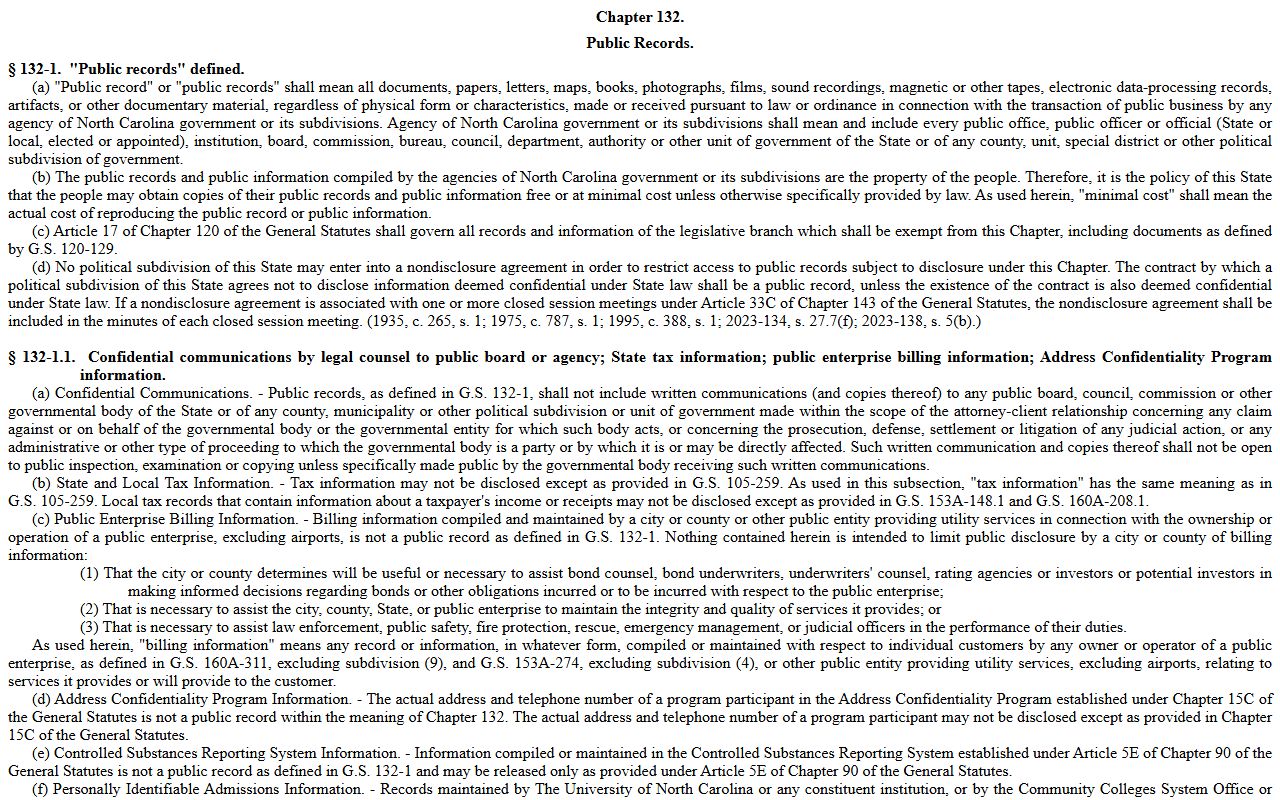
That statute source matters because Scotland County warrant access depends on whether a warrant or criminal paper has reached a public-record stage.
Scotland County Warrant Types
Several warrant and warrant-like records can affect a Scotland County criminal matter. An arrest warrant authorizes law enforcement to arrest a person on a criminal charge. A bench warrant is usually issued by a judge after a missed court date, contempt, probation violation, or failure to obey a court order. A search warrant authorizes a search or seizure, and it may not be visible to the public before it is executed and returned. A criminal summons is different because it orders a court appearance without immediate arrest.
- Arrest warrant - A magistrate or judge authorizes arrest on a criminal accusation.
- Bench warrant - A judge issues the warrant from the bench, often after failure to appear.
- Search warrant - Law enforcement may search a place or seize evidence within the order's terms.
- Criminal summons - The person must appear in court, but the paper is not an arrest order.
- Out-of-county or fugitive matter - Another jurisdiction may hold the warrant while Scotland County handles contact or custody.
Warrant status can cross record systems. A charge may be seen in Citizen Connect, while the later case file, hearings, disposition, and costs are tracked in eCourts and at the Clerk of Superior Court. Scotland County warrant records should be read with the related Scotland County criminal court records when a case has been filed.
How to Search Scotland County Warrants
Start with official sheriff and court channels. The Citizen Connect Criminal Papers Search accepts a by-name search. The Most Wanted page shows public wanted-person notices when the Sheriff's Office has active listings. The eCourts Portal can confirm related filed cases, court dates, and failure-to-appear entries, while the Clerk of Superior Court and magistrates can answer official court-record questions.
- Search Citizen Connect Criminal Papers by first, middle, and last name. Use spelling variants if the name may be abbreviated.
- Check the Most Wanted page for current public alerts. Do not treat an empty most-wanted page as proof that no warrant exists.
- Search the eCourts Portal by name or case number for filed criminal cases, hearings, and failure-to-appear status.
- Call the Sheriff's Office, magistrates, or Clerk of Superior Court when the portal result is unclear or urgent.
- Speak with counsel before appearing in person if the search suggests an active warrant.
The Criminal Papers Search screenshot comes from Scotland County Citizen Connect Criminal Papers Search.
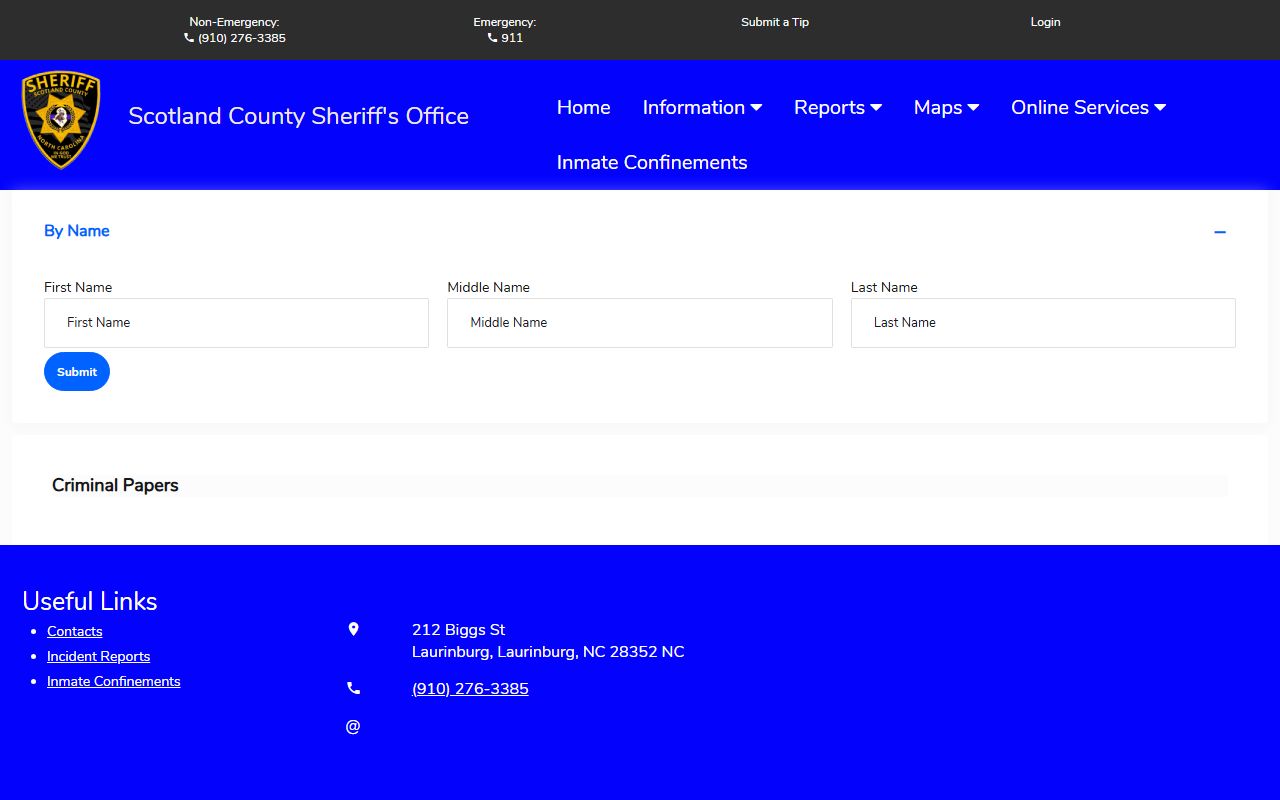
The by-name form is useful because Scotland County warrant checks often begin with criminal-paper status rather than a broad active-warrant list.
Scotland County Warrant Search Fields
The Criminal Papers Search has a narrow interface. The research crawl found a by-name tab and separate first, middle, and last name fields. The Most Wanted page does not work like a search form. It is a listing page with a photo-gallery area, a warning not to approach wanted persons, a phone contact, and a tip channel. Both tools should be paired with official phone contact for a true active-warrant check.
| Field Label | Type | Required | Notes |
|---|---|---|---|
| By Name | Tab | Yes for this portal | The text crawl showed name search only. |
| First Name | Text | Optional or unspecified | Use when known to reduce false matches. |
| Middle Name | Text | Optional or unspecified | Helpful when names are common or records use initials. |
| Last Name | Text | Optional or unspecified | The most important name field for a warrant paper search. |
| Criminal Papers | Result area | Not applicable | Matching records display under this heading if the portal returns results. |
For most-wanted status, the Sheriff page uses a listing rather than a search field. It includes a wanted-person photo gallery area, a submit-a-tip option, and the Sheriff's Office phone number. The research check found no active wanted persons at the time of inspection, but that status can change.
What Scotland County Warrant Records Show
A Scotland County warrant record may be sparse in the public portal. The inspected Most Wanted page showed status text, the agency, a warning, phone contact, and tip options rather than a named active record. The Criminal Papers Search showed its name fields but did not provide a copied named record in the research file. Because no active wanted-person record was copied, the safest use is a field inventory based on confirmed interface parts plus cautious labels for fields that may appear when a record exists.
| Field | What It Shows |
|---|---|
| Status message | Whether the Most Wanted page currently lists active wanted persons. |
| Photo gallery area | Where wanted-person images may appear if the Sheriff publishes them. |
| Warning language | Instructions not to approach and to contact authorities. |
| Tip channel | Anonymous reporting or submit-a-tip option. |
| Agency | Scotland County Sheriff's Office as the publishing agency. |
| Contact phone | The Sheriff contact number published for warrant tips. |
| Name fields | First, middle, and last name fields used for the Criminal Papers Search. |
The Most Wanted screenshot comes from the official Scotland County Citizen Connect Most Wanted listing.
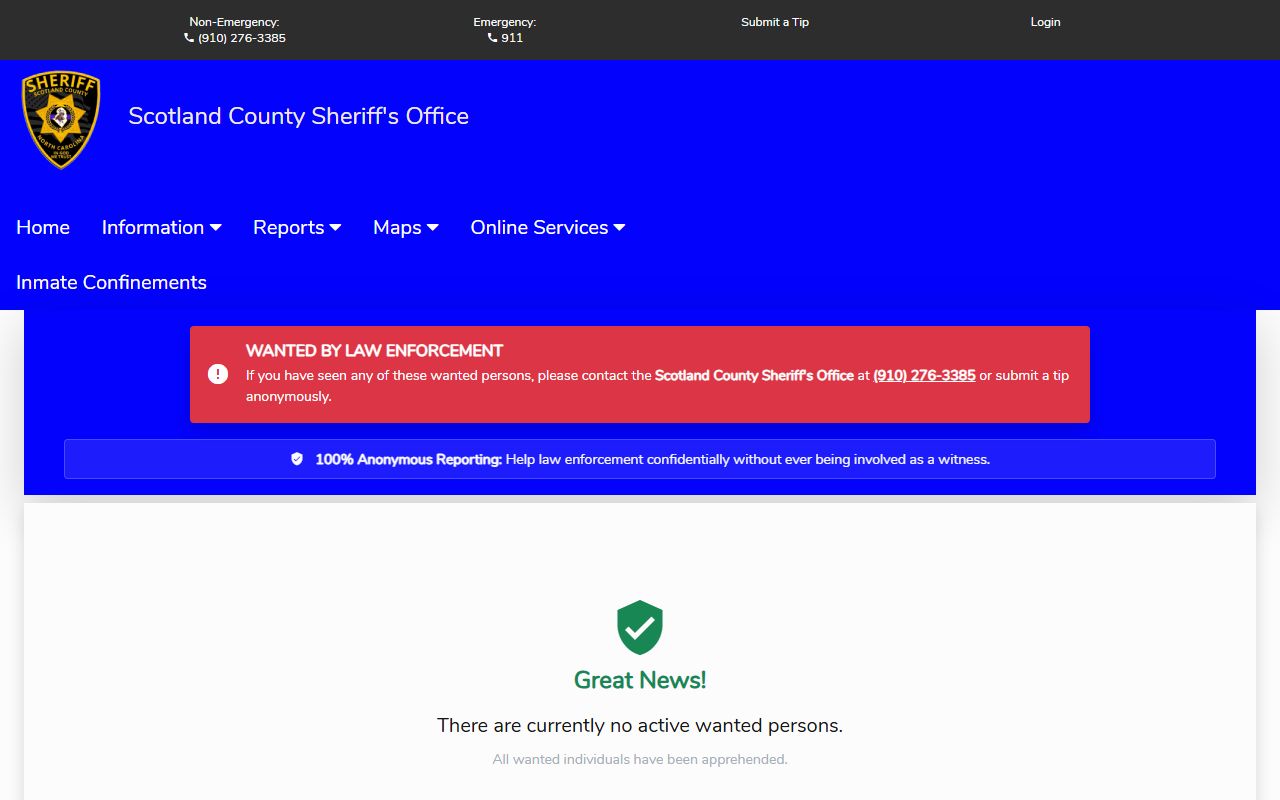
The listing page is useful for public alerts, but the absence of a listing should be verified with the Sheriff, magistrate, or Clerk of Superior Court before anyone relies on it.
Handling Scotland County Warrants
A person who may have an outstanding Scotland County warrant should confirm the record through official channels and should not rely on a private lookup. The Sheriff non-emergency number is 910-276-3385. Magistrates are listed in the Judicial Branch contact directory at 910-266-4540. The Clerk of Superior Court is 910-266-4400 for filed case status, hearing dates, and court copies. The District Attorney number is 910-266-4500 for prosecution office contact, but that office does not give defense advice.
If surrender is needed, plan for transport, medicine, phone calls, and bond support before arrival. Bond may be cash, secured, unsecured, a written promise, or no bond, depending on the charge and judicial order. After arrest or voluntary surrender, booking occurs through the detention center, then an initial appearance or bond review follows court and magistrate rules. A recalled or served warrant may not clear every public system at once, so keep paperwork showing service, recall, dismissal, or other court action.
Important: Speak with a lawyer before appearing at the Sheriff's Office or courthouse on a possible active warrant.
Scotland County Warrant Tips
The Most Wanted page tells readers not to approach wanted persons and to contact the Scotland County Sheriff's Office immediately. It also includes a submit-a-tip path through Citizen Connect. Use the Sheriff non-emergency line for non-urgent public safety tips, and call 911 for immediate danger. The research did not locate a separate official Scotland County Crime Stoppers reward page, so warrant-tip copy should stay with the Sheriff's official phone and tip channel.
Custody-notification tools may help after an arrest, but they are not warrant databases. VINELink is a custody-notification system. It can help track release or custody events where available, but it does not replace the Scotland County Sheriff, magistrates, Clerk of Superior Court, or eCourts for warrant status.
The custody-notification image is sourced from VINELink.
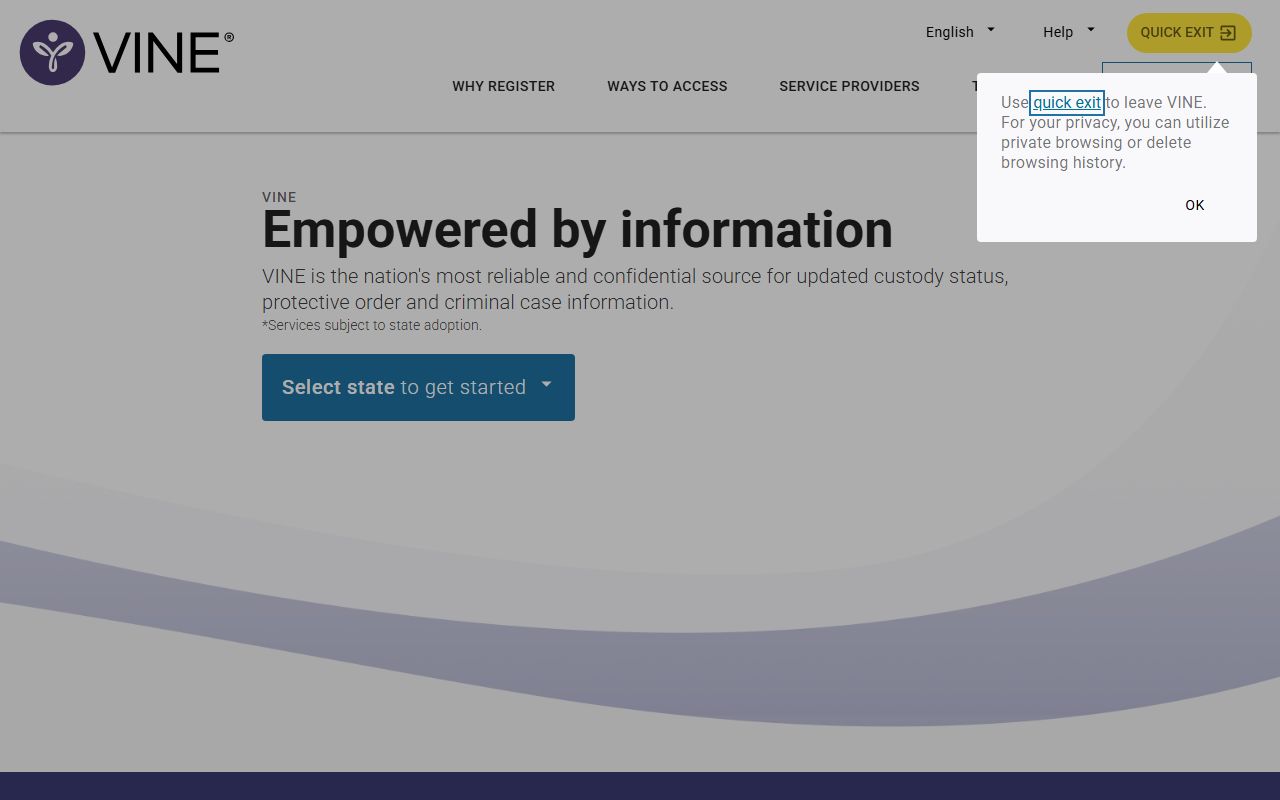
VINELink belongs in the warrant workflow only after custody becomes the concern, especially when family members need notice rather than a court-paper search.
Restricted Scotland County Warrants
Some Scotland County warrant records are not open in ordinary public systems. A search warrant may be sealed or may not be public before return. Juvenile matters are restricted under North Carolina juvenile-record law. Expunged or sealed cases should not appear in normal public search results. Federal warrants are not local Scotland County court records and may involve the U.S. Marshals or federal court systems instead of the Clerk of Superior Court.
North Carolina's public-record framework gives access to returned warrants and criminal papers unless a court order or specific statute limits access. For a court case file, use the Clerk of Superior Court. For sheriff records, use Citizen Connect or the Sheriff's Office. For court dates, use eCourts or call the clerk. That split is important because a warrant, booking, charge, and criminal case are related but not identical records.
Note: No Scotland County sheriff or police app-only warrant lookup was found in the official research sweep.