
Scotland County Clerk Contact
North Carolina does not use a local county clerk for court filings in the way some states do. In Scotland County, the court-record office is the Clerk of Superior Court. The clerk supports both Superior Court and District Court files within the statewide North Carolina General Court of Justice. The research identifies the clerk as the custodian for civil actions, criminal actions, estates, special proceedings, judgments, liens, lis pendens, minutes of court, and other records that North Carolina law requires the clerk to maintain.
The court-record statute requires clerks to keep court records, files, dockets, and indexes. Except where another law bars access, those records are open for public inspection during regular office hours. For Scotland County, the same courthouse contact line is used for court files, copies, divorce judgments, estate records, and clerk-office questions.
Scotland County Clerk of Superior Court
212 Biggs Street
Laurinburg, NC 28352
910-266-4400
Monday-Friday, 8:30 a.m.-5:00 p.m.
Mail: P.O. Box 769, Laurinburg, NC 28353
Scotland County Clerk Duties
The Clerk of Superior Court is the local point for filed court documents rather than sheriff incident reports or Register of Deeds instruments. The office keeps the case file after pleadings, charges, judgments, orders, estate filings, special proceedings, and docket events enter the court system. The clerk also provides file inspection and copies when the record is public and when the requested item is in the clerk's custody. For a court case, use the clerk. For marriage licenses, recorded marriage copies, deeds, plats, and vital records, use the Register of Deeds.
- Maintain civil, criminal, estate, special proceeding, judgment, lien, and court-minute records.
- Provide public inspection of court records during office hours unless a law or order restricts access.
- Issue or provide copies from court files for a fee, including divorce judgments granted in Scotland County.
- Support estate and probate matters because the clerk acts as probate judge for most North Carolina estates.
- Provide public self-service terminal access for civil, special proceeding, and estate case information.
The county property records search page belongs to the Register of Deeds, which is separate from the Clerk of Superior Court.
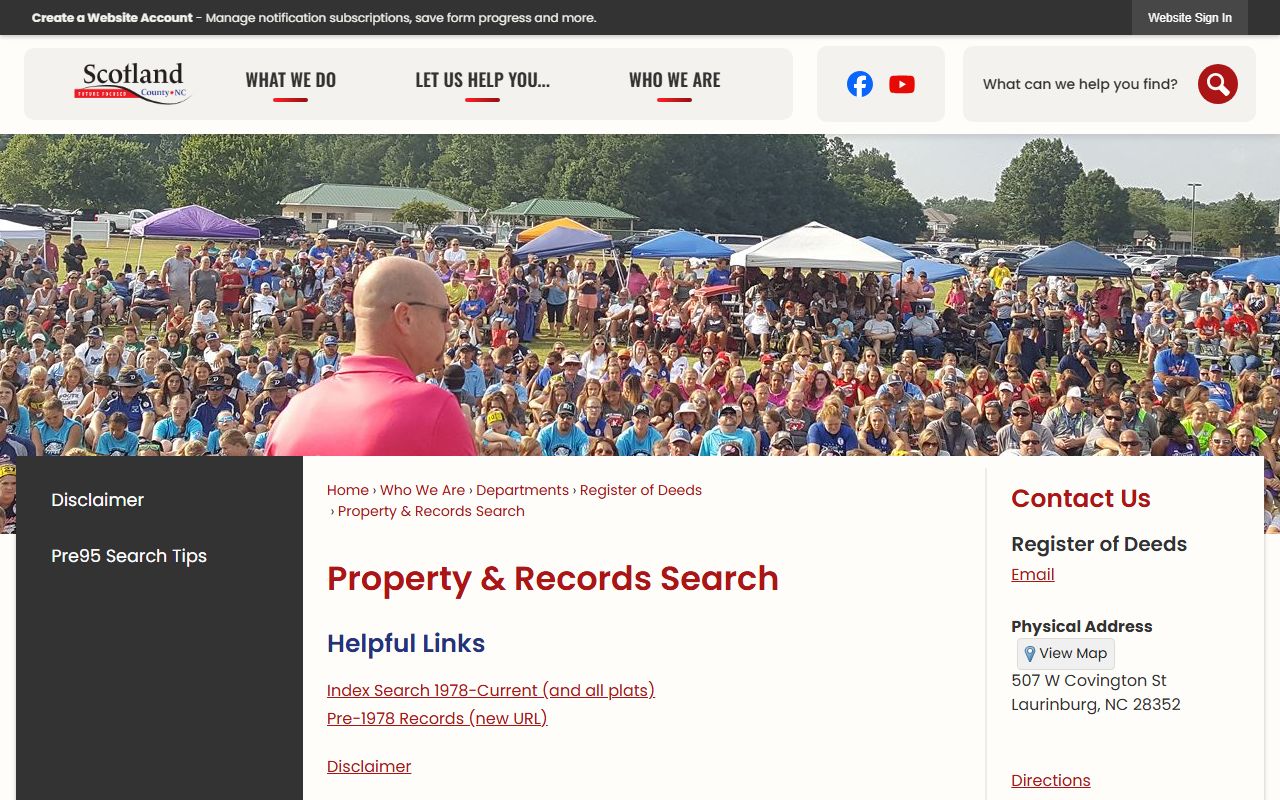
That separate Register search is useful for land records, but court-file copies remain a Clerk of Superior Court function.
Request Scotland County Certified Copies
Certified court copies are used when a person needs an official court document rather than a screen print or informal case summary. Common examples include divorce judgments, orders, judgments, estate documents, and other filed court papers. The North Carolina Judicial Branch court-records help page says court files can be viewed by visiting the clerk's office in the county where the case is located and that staff can provide copies of documents in court files for a fee.
- Identify the case number, party names, record type, and approximate filing or judgment date before contacting the clerk.
- Check the eCourts Portal if a public case summary may help confirm the case number or filing date.
- Call the Clerk of Superior Court at 910-266-4400 before mailing a request, especially if payment or certification is needed.
- Ask whether the record is available for public inspection, whether certification is available, and what fee applies.
- Submit the request in person or by the clerk-approved mail process, then pick up or receive the copy as instructed.
For Judicial Branch administrative records rather than court case-file documents, use the N.C. Judicial Branch public-record request page. That administrative-record channel does not replace the Scotland County clerk when the item requested is a court document in a local case file.
Scotland County Request Fields
The research did not locate a Scotland-specific court-copy request form, but the official access channels show the fields a requester should have ready. Complete and precise requests reduce delays, especially when a file is old, has common party names, or needs a certified judgment copy. Do not include unnecessary Social Security numbers, account numbers, or other private identifiers in a public records request unless the clerk specifically requires a limited identifier for matching.
| Field | Required | Notes |
|---|---|---|
| Case number | Recommended | Use Portal or prior paperwork to confirm if available. |
| Party names | Yes | Include full names and role if known, such as plaintiff, defendant, petitioner, or decedent. |
| Record type | Yes | Examples include divorce judgment, order, estate filing, criminal judgment, or civil judgment. |
| Filing or judgment date | Recommended | Approximate dates help staff locate older or similar records. |
| Certification needed | Yes | State whether plain copies or certified copies are required. |
| Delivery method | Yes | Confirm pickup or mail handling before sending payment. |
The Register of Deeds search disclaimer is a useful contrast because it says Register records online are informational and official records are kept in that office. The same practical rule applies to court records: for certified court copies, use the record custodian.
The Register search disclaimer illustrates why online images and official copies are not always the same thing.
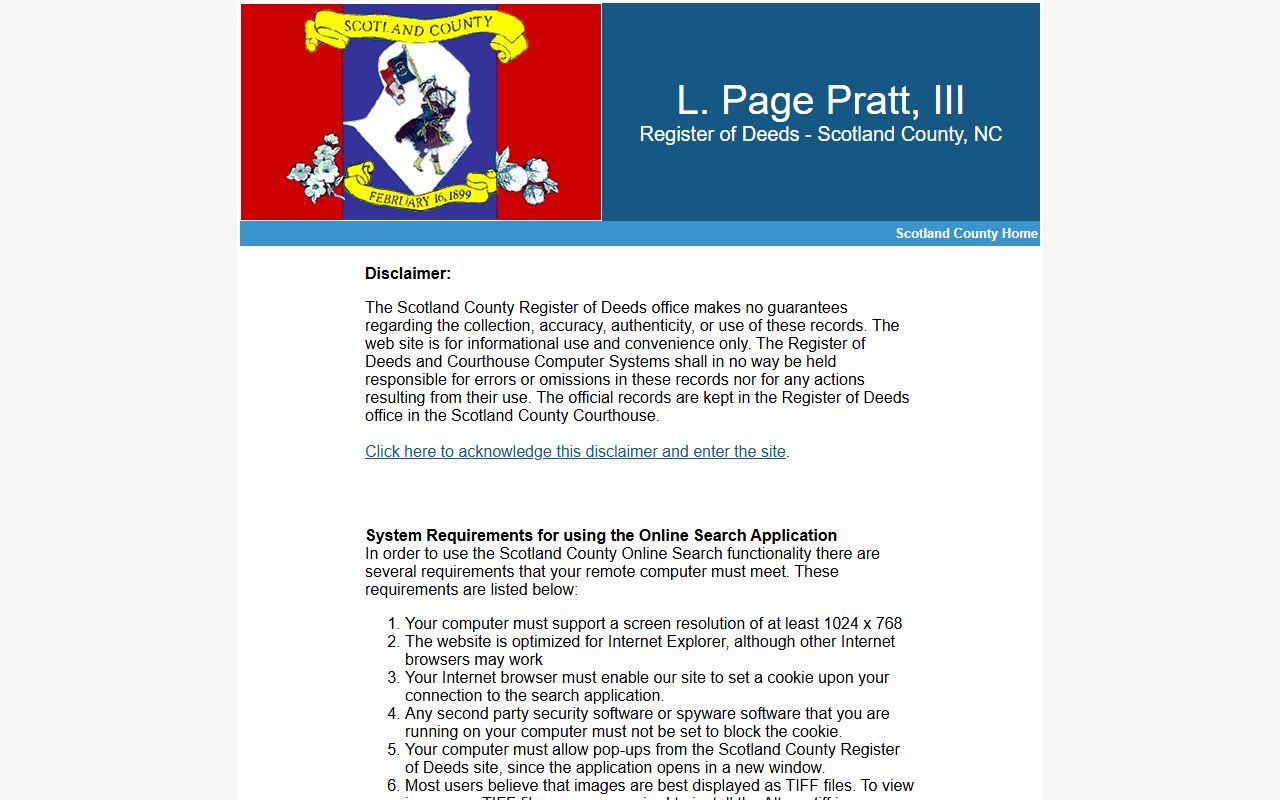
For court records, the official custodian is the Clerk of Superior Court, not the deed-search website.
Scotland County Clerk Fee Table
Scotland-specific court-copy amounts were not located in the researched official sources. The Judicial Branch confirms that court-file copies are available for a fee, but the research file did not verify the current copy and certification amounts for Scotland County. The local Register of Deeds fee page does list marriage, vital, real-estate, and recording amounts. Those fees are included only to show which costs belong to the Register rather than the Clerk of Superior Court.
| Item | Amount |
|---|---|
| Court-file plain copy | Fee confirmed, amount not located in Scotland-specific research |
| Court-file certified copy | Call Clerk of Superior Court for current amount |
| Divorce judgment copy | Available from clerk for a fee, amount not located locally |
| Marriage license | $60, Register of Deeds fee |
| Certified marriage license copy | $10, Register of Deeds fee |
| Uncertified vital or marriage copy | $0.25, Register of Deeds fee |
Use 910-266-4400 for court-copy pricing. Use 910-277-2575 for Register of Deeds fees such as marriage licenses, certified marriage copies, birth certificates, death certificates, deeds, plats, and UCC filings.
Scotland County Clerk Access Channels
Scotland County court records can be reached through several channels, and each channel serves a different purpose. Online search is best for public case summaries and hearing dates. Public terminals are useful for civil, special proceeding, and estate case information. The clerk's counter is needed for complete file inspection, copies, certification, and older file help. A Judicial Branch public-record request is for administrative records rather than a normal request for a court case document.
- eCourts Portal for public case summaries, hearings, judgments, and eligible payments.
- Obtaining Court Records for clerk-office file inspection and copy guidance.
- Scotland County Contact Directory for courthouse offices, judges, magistrates, and court programs.
- Scotland County Register of Deeds for marriage, vital, land, military discharge, and recording records.
Public transit may matter for in-person clerk access. The county's Scotland County Area Transit System is a curb-to-curb service using mini-vans and lift-equipped accessible buses.
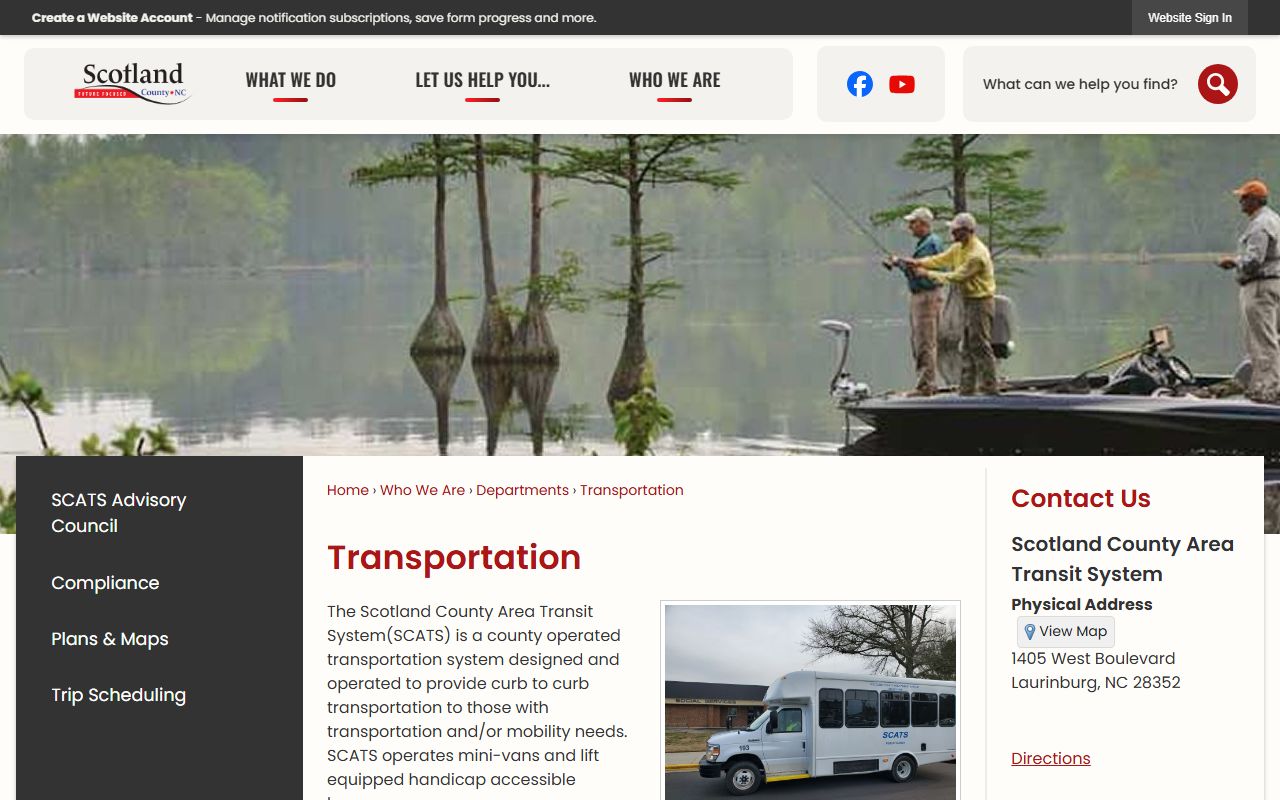
Transit information does not replace clerk contact, but it can help visitors plan a trip to inspect or copy court files.
Mail, Online, and Related Offices
Scotland County went live in North Carolina eCourts on October 14, 2024. The Portal is the online public access point for many public case records, hearing searches, judgments, and payments. It is not a substitute for a certified copy from the clerk. The Judicial Branch also warns that Portal should not be used as the official background-check channel. Background-check-quality searches and complete court files should be handled through clerk-office channels.
Mail requests should use Scotland County Courthouse, P.O. Box 769, Laurinburg, NC 28353, but call first. The research did not locate a detailed Scotland-specific mail-copy rule for court files, and sending the wrong payment can delay the request. If the record is a divorce judgment, estate document, civil judgment, or criminal judgment, ask the clerk what amount, format, and return-envelope method is currently accepted.
Related county and justice-system offices can affect a clerk records search without being the record custodian. The county Reentry Program serves qualifying adults connected to Scotland County incarceration or supervision, but it is not a court docket. Federal court files are also separate; the official Middle District counties page lists Scotland County in the Middle District of North Carolina with a military-installation exception.
The Scotland County Reentry Program is an official local justice-resource page, not a Clerk of Superior Court records portal.
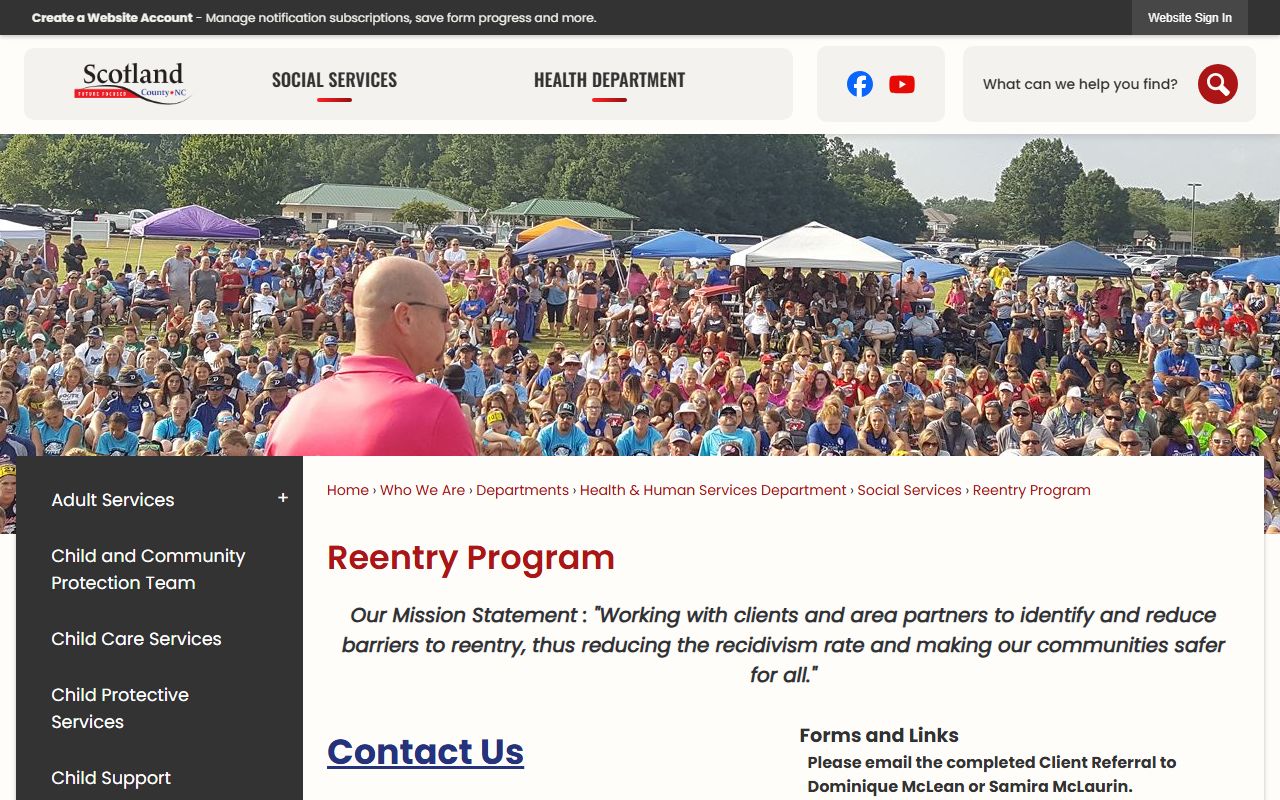
Use it for reentry program information, while case files, judgments, and probate records remain clerk-office matters.
The Middle District county list is useful when a case is federal rather than a Scotland County state court matter.
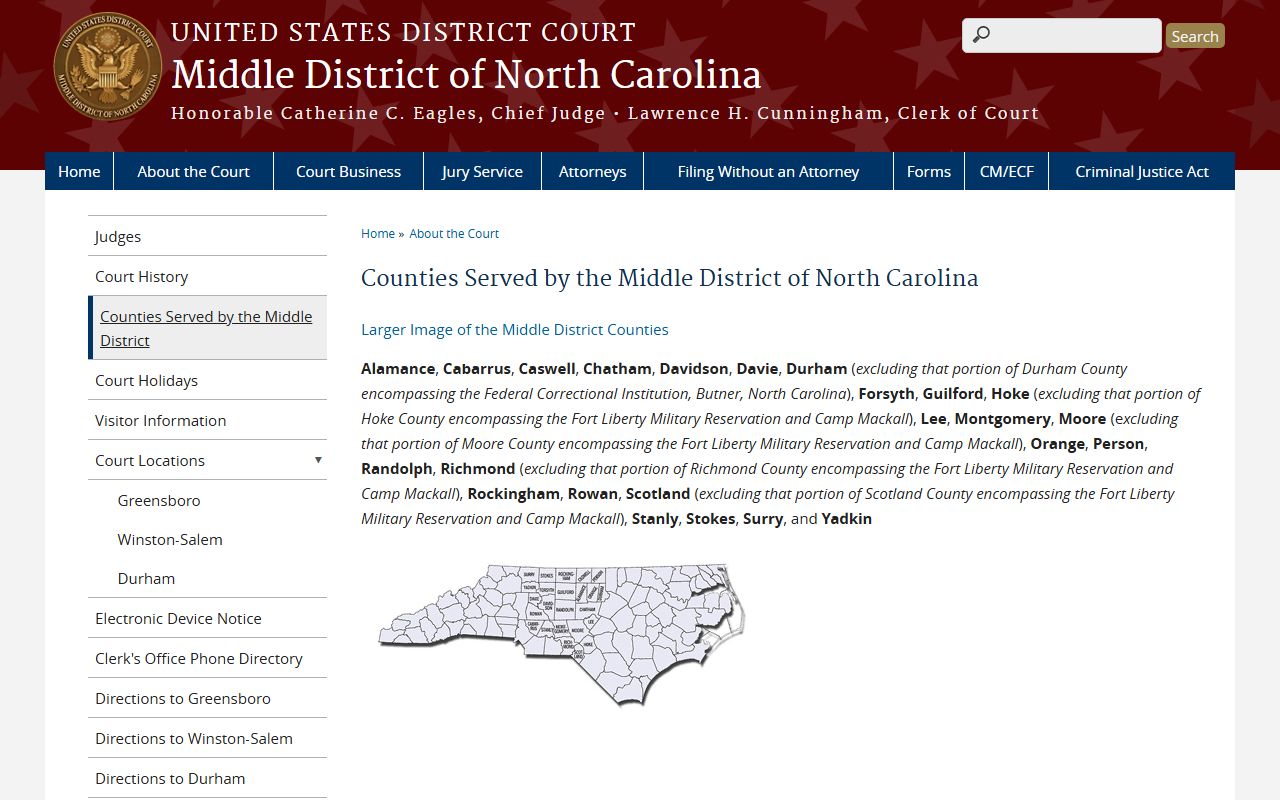
Federal filings are searched through federal court systems, while Scotland County state trial-court records are handled through eCourts and the local Clerk of Superior Court.