
Scotland County Trial Court Overview
North Carolina describes its courts as one unified statewide system. Scotland County is not running a separate county court system. The trial-court divisions that matter most for local public access are the Superior Court Division and the District Court Division. The county courthouse in Laurinburg is the local access point for both divisions, and the Clerk of Superior Court is the local custodian for many court filings, files, dockets, indexes, estates, special proceedings, judgments, and copies.
Scotland County is listed by the Judicial Branch as Prosecutorial District 21, Superior Court District 21, and District Court District 21. Superior Court handles felony criminal cases and civil cases over $25,000, along with certain appeals and jury-trial matters. District Court handles many misdemeanors, infractions, juvenile matters, domestic cases, small claims appeals, and magistrate-related matters. A user looking for hearings, public case summaries, or filed documents usually starts with eCourts Portal or the clerk, not a separate local court website.
The official Federal Bureau of Prisons inmate locator is not a Scotland County trial court system, but it helps mark the line between state trial courts and federal custody.
Use state court channels for Scotland County Superior Court and District Court cases, and use federal systems only for federal matters.
Scotland County Court Office Table
The research did not identify separate numbered county trial courts in Scotland County. Instead, the Scotland County court structure is a set of Superior Court, District Court, clerk, magistrate, prosecutor, and court-program contacts within the statewide North Carolina court system. The table below uses the required court/office format and lists every researched court office that supports the local Superior Court and District Court divisions.
| Court / Office | Type | Address | Phone |
|---|---|---|---|
| Scotland County Courthouse | Superior Court and District Court access point | 212 Biggs Street, Laurinburg, NC 28352 | 910-266-4400 |
| Clerk of Superior Court | Court records, filings, copies, estates, special proceedings | 212 Biggs Street, Laurinburg, NC 28352 | 910-266-4400 |
| Superior Court Judges Office and Court Reporter | Superior Court judicial office and court reporter contact | Courthouse directory; judges office mailing address P.O. Box 339, Rockingham, NC 28380 | 910-419-7686 |
| District Court Judges | District Court judicial office contact | Scotland County courthouse system | 910-419-7575 |
| Magistrates | Magistrate matters, warrants/process, initial proceedings, ceremonies | Scotland County courthouse system | 910-266-4540 |
| District Attorney | Prosecutorial District 21 criminal prosecution | Scotland County courthouse contact directory | 910-266-4500 |
| Guardian ad Litem | Child and juvenile advocacy program contact | Scotland County courthouse contact directory | 910-266-4531 |
| Child Custody Mediator | Custody mediation contact | Scotland County courthouse contact directory | 910-272-5914 |
| Court-Ordered Arbitration | Arbitration contact | Scotland County courthouse contact directory | 910-419-7575 |
| Official Court Reporters | Transcript and court-reporting contact | Scotland County courthouse contact directory | 910-266-4579 |
The Scotland County contact directory is the official source for the court office phone list. The courthouse page lists the visit address, mailing address, public hours, and main phone.
Scotland County Court Comparison
North Carolina's lower-court map is different from states that have independent county courts or justice of the peace courts. Scotland County uses Superior Court, District Court, and magistrates within the statewide General Court of Justice. That structure affects where a case is filed, which office has the record, and whether an online search should be filtered by case type rather than by a local court name.
| Point | Superior Court | District Court | Magistrates |
|---|---|---|---|
| Civil role | Civil cases over $25,000 and certain appeals or jury matters. | Lower civil matters, domestic cases, small claims appeals, and related proceedings. | Small claims and certain civil processes as assigned by law. |
| Criminal role | Felony criminal cases and higher trial-court proceedings. | Many misdemeanors, infractions, and preliminary criminal matters. | Warrants, summonses, first appearance or bond-related duties depending on case type. |
| Juvenile/family role | Limited or appellate role depending on matter. | Juvenile, domestic, custody, and support matters are commonly District Court work. | Not the main juvenile or family court, though magistrates handle assigned processes. |
| Record access | eCourts Portal and Clerk of Superior Court. | eCourts Portal and Clerk of Superior Court. | Records may feed into court or criminal-paper records handled through court or sheriff channels. |
The North Carolina courts are described by the Judicial Branch as unified statewide courts. That means Scotland County users do not choose between a county court and a state district court. They identify the case type and use the statewide Portal or the Clerk of Superior Court.
Scotland County Case Flow
A Scotland County case moves through the state trial system based on case type. A misdemeanor or infraction commonly begins in District Court. A felony may involve magistrate or first appearance steps before moving toward Superior Court proceedings. A civil case goes to the division with jurisdiction over the value or subject matter. Estate matters begin with the Clerk of Superior Court acting as probate judge, but a will caveat goes to a Superior Court judge.
Criminal flow: charge or arrest › magistrate or first appearance › District Court setting or Superior Court path › indictment or other charging step when required › arraignment › pretrial hearings › plea or trial › disposition › sentencing › appeal.
Civil flow: complaint or petition filed › service › answer or response › motions or mediation where applicable › hearing or trial › judgment › post-judgment activity › appeal.
Estate flow: estate application › will or intestacy review › qualification or small-estate affidavit › notices and inventory › accounting › distribution › closing, unless a contested issue sends the matter to a judge.
Note: A Portal case summary may show only public events, while the complete file and certified copies come from the clerk.
Scotland County Court Divisions
Superior Court and District Court divide trial work by subject and seriousness. Superior Court is the trial division for felony criminal cases and civil cases over $25,000. District Court is the trial division for many civil, criminal, juvenile, domestic, and magistrate matters. Small claims, juvenile delinquency, child custody, child support, domestic cases, traffic infractions, and many misdemeanors often point to District Court records. Felony prosecution, higher-value civil disputes, and some appeals point to Superior Court records.
The Judicial Branch court-types overview and the separate Superior Court and District Court pages support those roles. The District Attorney for Prosecutorial District 21 serves Anson, Richmond, and Scotland counties, and Indigent Defense Services lists Scotland County in Defender District 21. Those regional assignments matter in criminal court but do not create a separate local records office.
The official Scotland Correctional Institution page is a state correctional source, not a county trial-court docket.
Custody or prison records may help explain where a person is held, but court outcomes and filings remain in state court records.
Scotland County Judicial District
Scotland County is in Prosecutorial District 21, Superior Court District 21, and District Court District 21. The District Attorney office for Prosecutorial District 21 serves Anson, Richmond, and Scotland counties. Court reporters, custody mediation, arbitration, Guardian ad Litem, magistrates, and district and superior court judge contacts are listed in the official Scotland County court contact directory. Those offices are part of the court ecosystem, but the Clerk of Superior Court remains the core local records contact for court files.
The U.S. Attorney Middle District information is a federal prosecutor source and should not be confused with Scotland County District Attorney or state trial-court records.
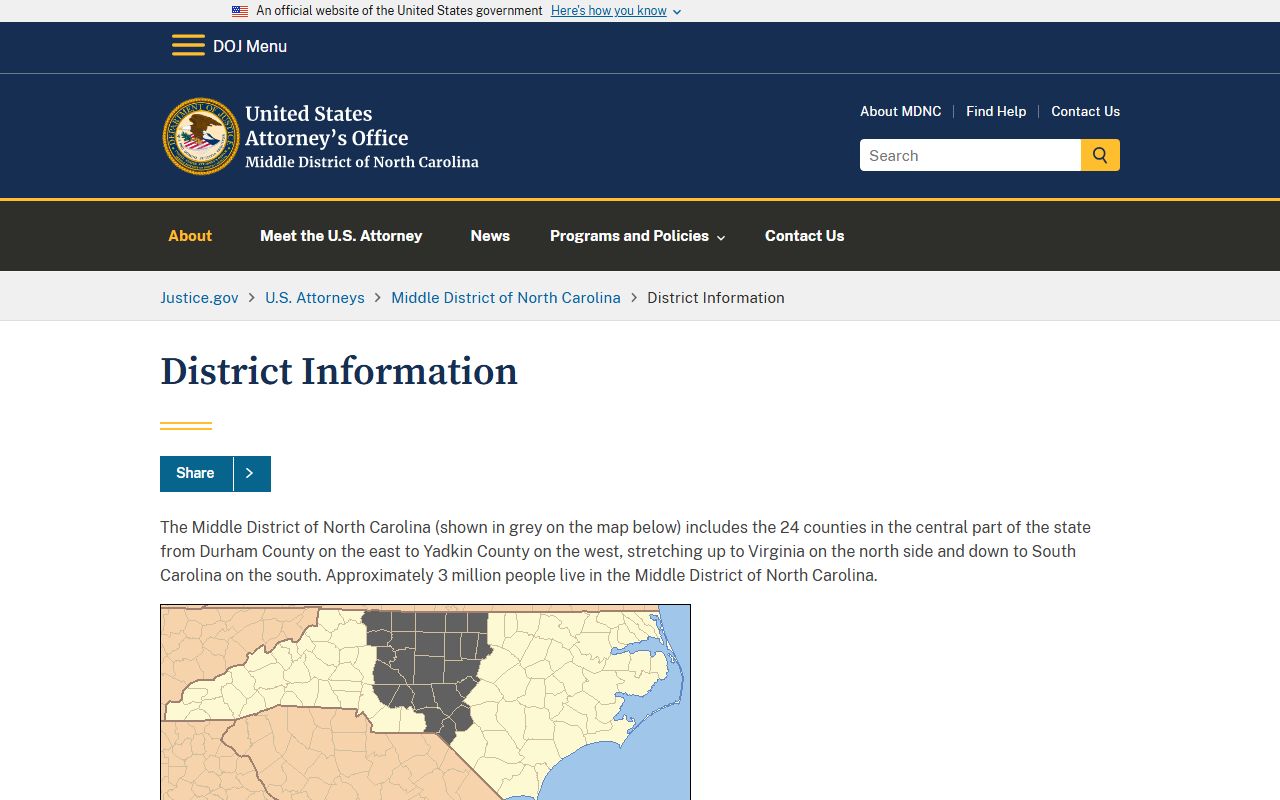
State prosecutions use the North Carolina District Attorney structure, while federal prosecutions use the U.S. Attorney and federal court system.
Scotland County Magistrates
Magistrates are the lower-court officials named in the Scotland County structure map. The research lists the magistrate phone as 910-266-4540. Magistrates can handle initial criminal processes, warrants and summonses, first appearance or bond-related duties depending on the case type, small claims, certain civil processes, and marriage ceremonies. They are not a separate county court with a separate public case portal. Records from magistrate-related matters may appear through court records, criminal-paper records, sheriff records, or clerk-office files depending on what happened next.
Federal court is separate. Scotland County is primarily in the U.S. District Court for the Middle District of North Carolina, with an exception for the portion encompassing Fort Liberty Military Reservation and Camp Mackall. The federal court's official locations include Greensboro, Winston-Salem, and Durham, and the Greensboro courthouse is the L. Richardson Preyer Courthouse. Bankruptcy is handled by the U.S. Bankruptcy Court for the Middle District of North Carolina. Federal records use PACER or federal CM/ECF systems rather than the Scotland County Clerk of Superior Court.
The Middle District court locations page is a federal court source, separate from Scotland County trial-court offices.
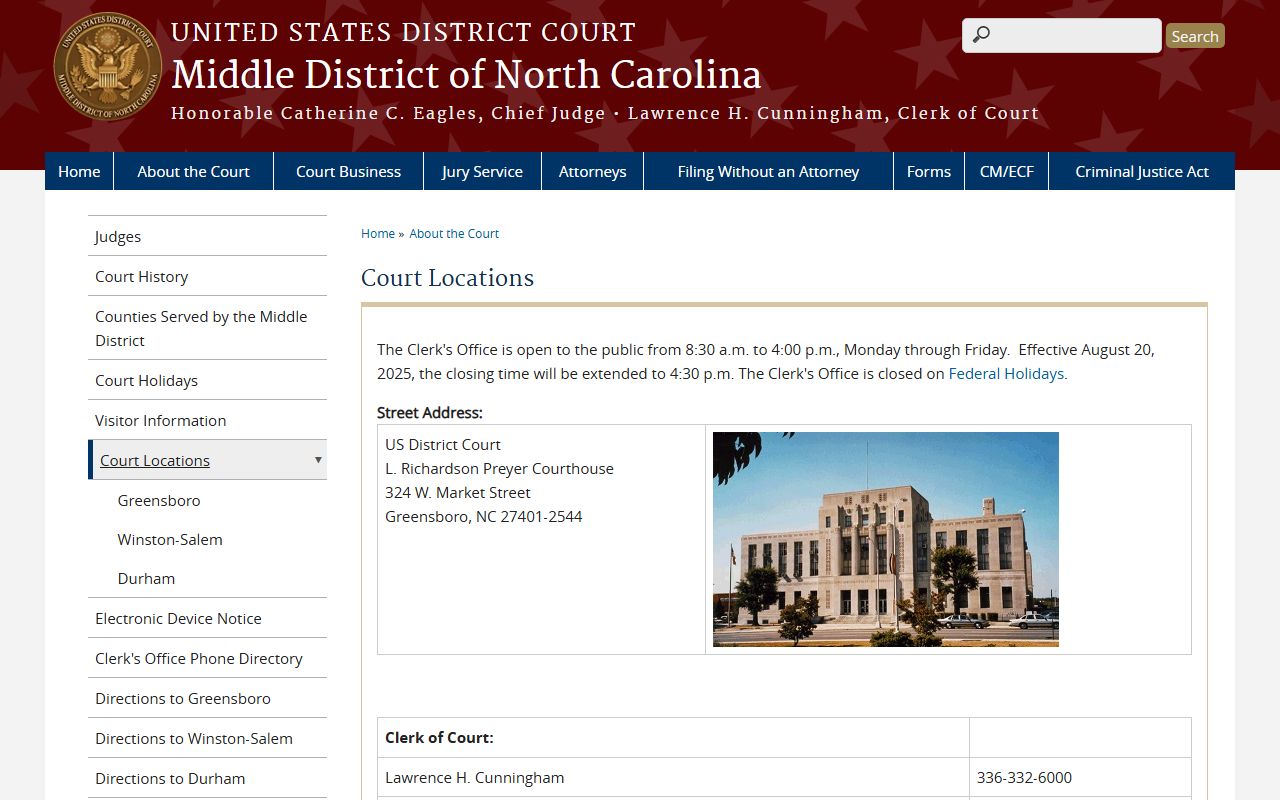
Use federal locations only for federal cases; Scotland County state trial matters remain in the North Carolina court system.
The Fourth Circuit Court of Appeals is the federal appellate court for Middle District federal cases.
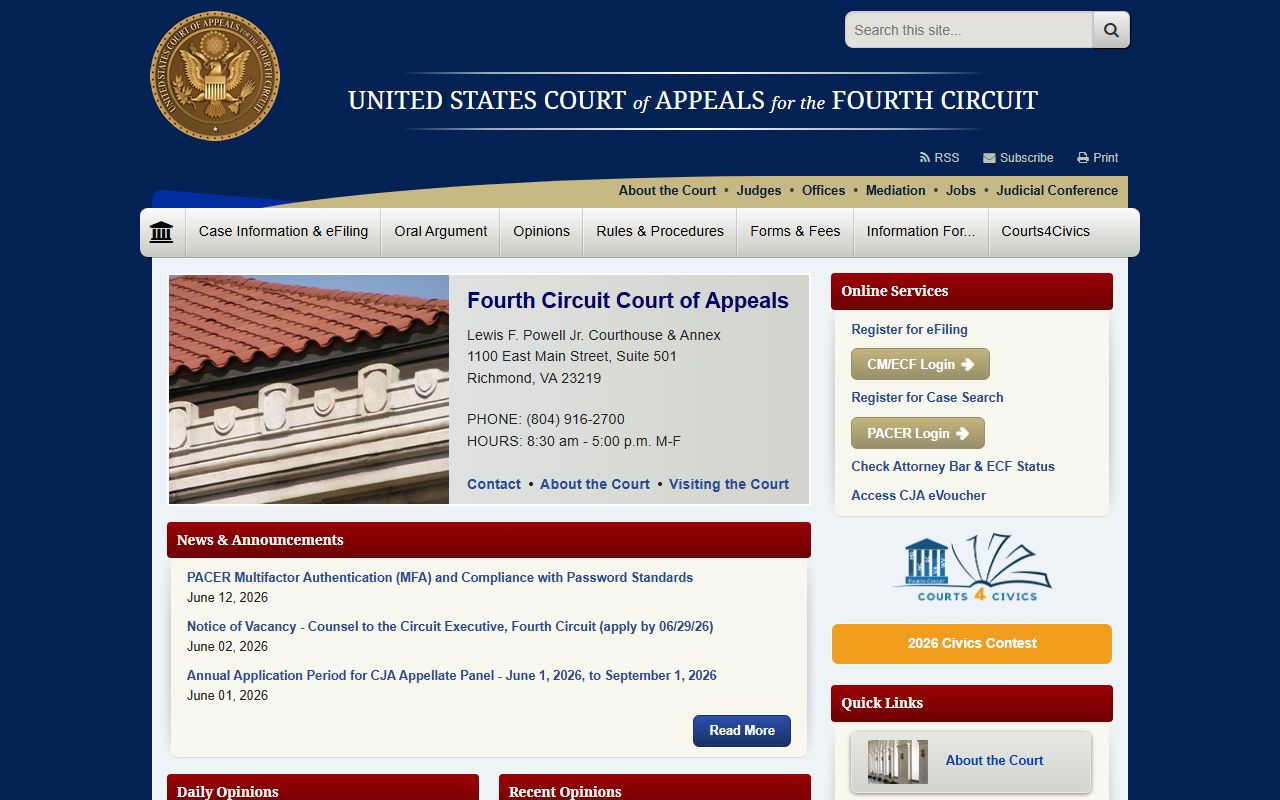
State appeals usually go first to the North Carolina Court of Appeals, while federal appeals from Middle District cases go to the Fourth Circuit.