
Scotland County Arrest Records and Court Charges
Scotland County arrest records come from the law-enforcement and detention side of a case. They may reflect who was taken into custody, the arresting agency, confinement status, and charge labels visible in the jail or sheriff systems. Court charge records begin when a criminal accusation is filed in the court system. That second record is the one that follows arraignment, hearings, pleas, amendments, dismissals, disposition, and sentencing.
The distinction matters. A booking or arrest entry can appear before the complete criminal case record has later court activity. The court file may later show that charges were amended, reduced, dismissed, or resolved by plea or trial. For current custody and booking details, use the jail-focused inmate record path. For the full case file and outcome, use Scotland County criminal court records. For court charges after arrest, check both sheriff-side portals and eCourts.
Scotland County has no official source found in research that promises a mugshot database. The verified local sources are Citizen Connect inmate confinements, incident search, criminal papers search, eCourts Portal, courthouse records, and direct phone channels.
Find Scotland County Arrest Records and Charges
The first step depends on what is known. If the question is whether a person is currently held or recently admitted, use Citizen Connect Inmate Confinements. If the question is about an incident report, use Citizen Connect Incident Search. If the question is about criminal papers or warrant-related information, use Citizen Connect Criminal Papers Search. Once charges are filed in court, use the North Carolina eCourts Portal to follow the court case.
- Check the sheriff-side Citizen Connect tool that matches the question: inmate, incident, or criminal papers.
- Search eCourts Portal by defendant name, case number, citation, or attorney when a court case may exist.
- Open the case summary and read each charge, docket event, hearing, and disposition.
- Call the Clerk of Superior Court for complete file copies or certified court records.
- Use the Sheriff's Office or magistrates for immediate warrant, bond, or custody-status questions.
The Sheriff's Office is listed at 212 Biggs Street, Laurinburg, with phone 910-276-3385. The jail phone is 910-277-3166. The Clerk of Superior Court is 910-266-4400, and magistrates are listed at 910-266-4540.
Scotland County Arrest Records Portals
The Scotland County Sheriff's Citizen Connect system supplies several arrest-adjacent channels. Inmate Confinements supports current confinements, admits by date range, charges, and arresting agency filters. Incident Search supports incident number, date range, name, and location searches. Criminal Papers Search supports a by-name search with first, middle, and last name fields. These portals are public-safety records, not a complete court case file.
| Tool | Best Use | Key Fields |
|---|---|---|
| Inmate Confinements | Current jail custody, admits, charges, and arresting agency data. | Current confinements, admits by date range, charges, arresting agency, date range. |
| Incident Search | Law-enforcement incident records linked to a report or event. | Incident number, date range, name, and location. |
| Criminal Papers Search | Criminal papers and warrant-related name searches. | First name, middle name, last name, criminal papers result area. |
Citizen Connect can show a charge label before the court record shows every later step. After a case is filed, eCourts is the source for hearings, docket entries, disposition, and sentence. That is why an arrest records search and a court charge search should be treated as related checks rather than one interchangeable lookup.
Court Charges After Arrest in Scotland County
After an arrest, a prosecutor decides what formal charges to pursue. The District Attorney for Prosecutorial District 21 prosecutes criminal cases for Scotland County and also serves Anson and Richmond counties. The District Attorney prepares the criminal trial docket and represents the State in criminal and some juvenile matters. Charges can be based on a warrant, criminal summons, indictment, or other criminal paper, then appear in the court record once filed.
| Charging Document | Who Uses It | How It Fits the Record |
|---|---|---|
| Complaint or Criminal Process | Law enforcement, magistrate process, or prosecution depending on charge path. | Often starts the case or supports arrest, summons, bond, or first appearance activity. |
| Information | Prosecutor. | A formal charging document that can set out charges pursued by the State. |
| Indictment | Grand jury process for felony prosecution. | A formal charge used in Superior Court felony matters. |
North Carolina research for Scotland County confirms that returned arrest warrants, search warrants, indictments, criminal summonses, and nontestimonial identification orders are public unless sealed by court order. That does not mean every investigative detail, juvenile matter, or sealed record is public.
Scotland County Charge Status Terms
Charge status can change as a case moves. A first charge list is not a final result. The prosecutor may amend a charge, reduce it, add a related count, dismiss it, or proceed to plea or trial. A court record should be read at the count level because one charge may be dismissed while another ends in conviction or sentencing.
| Status | What It Means |
|---|---|
| Pending | The charge is still active and has not reached final disposition. |
| Amended | The charge text, statute, level, or count may have changed by court action or prosecution decision. |
| Reduced | The charge was lowered to a less serious offense or different count. |
| Dismissed | The charge was ended without conviction on that count, subject to the specific dismissal type. |
| Disposition Entered | The record shows an outcome such as guilty, not guilty, dismissed, or other result. |
| Sentenced | A judgment imposed confinement, probation, costs, fines, restitution, or other terms after conviction. |
Note: A charge can be public and still not be a conviction, so the disposition field is essential.
Charges vs Convictions in Scotland County
Arrest records and charge records are often misunderstood because both can show offense labels. The legal weight is different. A charge is an accusation filed after arrest or through criminal process. A conviction is a final guilt result. A person can be charged and later have a case dismissed, found not guilty, amended to a different offense, or expunged if eligible and ordered by the court.
| Issue | Charge | Conviction |
|---|---|---|
| Meaning | An allegation that starts or supports prosecution. | A final finding of guilt by plea, verdict, or judgment. |
| Where to read it | Citizen Connect, criminal papers, eCourts charge list, and court file. | Disposition, judgment, and sentence entries in the court case. |
| Can change | Yes, it may be amended, reduced, added, or dismissed. | Can be appealed, corrected, or later affected by expunction if eligible. |
| Reader risk | Do not treat filing as proof of guilt. | Read sentence, probation, costs, and post-judgment activity. |
Scotland County Charge Record Sources
The Citizen Connect Incident Search is the sheriff-side source for incident records tied to reports, names, date ranges, and locations.
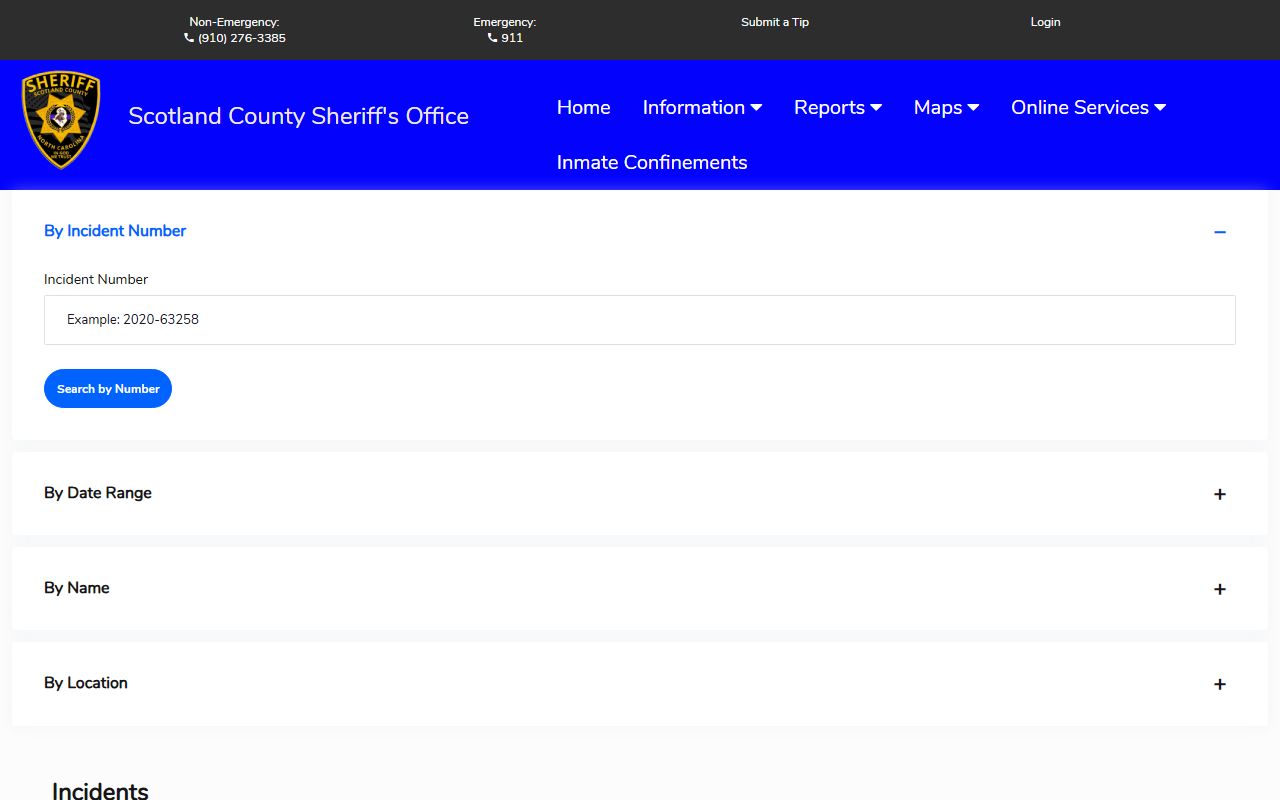
Incident information can explain the law-enforcement event, while filed charges and outcomes must be checked in the court record.
The District Attorney appointment notice supplies current Prosecutorial District 21 context for Scotland County criminal charges.
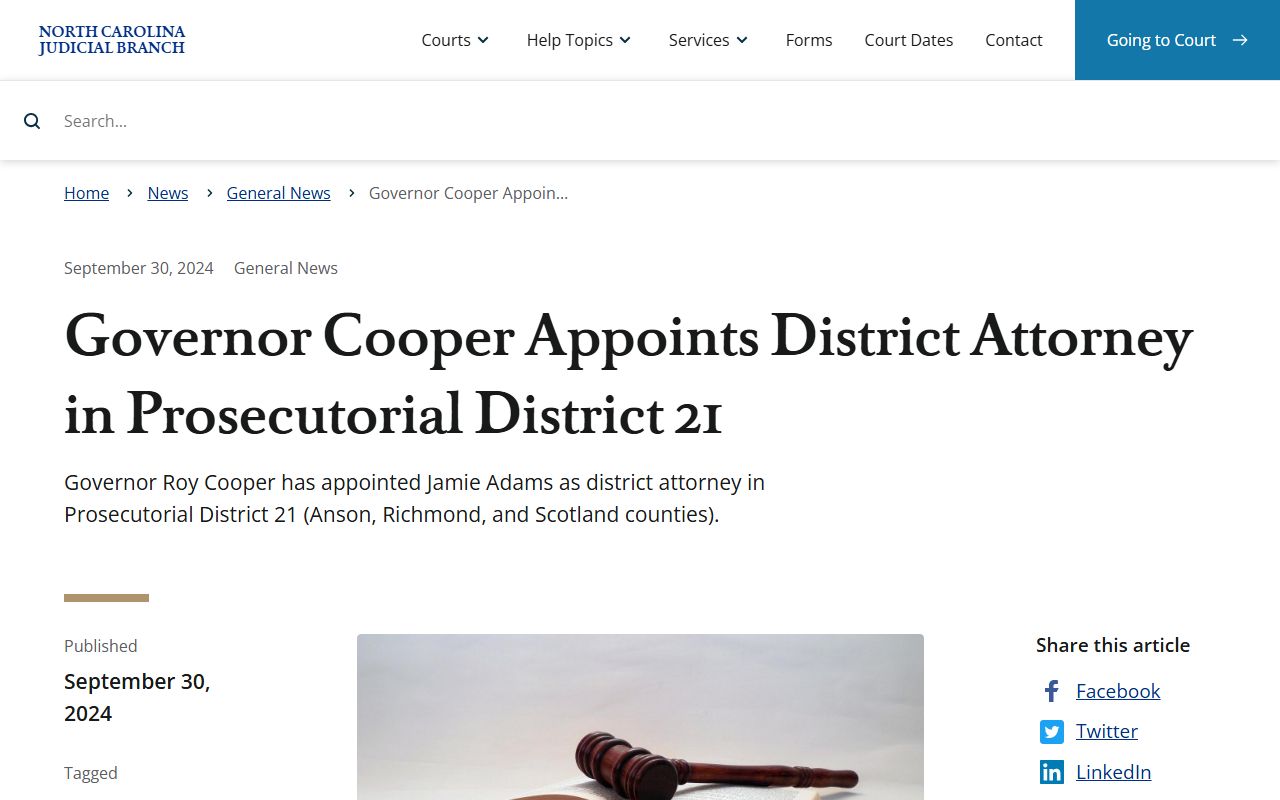
That matters because formal charges after arrest are prosecuted by the District Attorney, while records remain in court systems.
The Prosecutorial District 21 page identifies the prosecution district serving Scotland County.
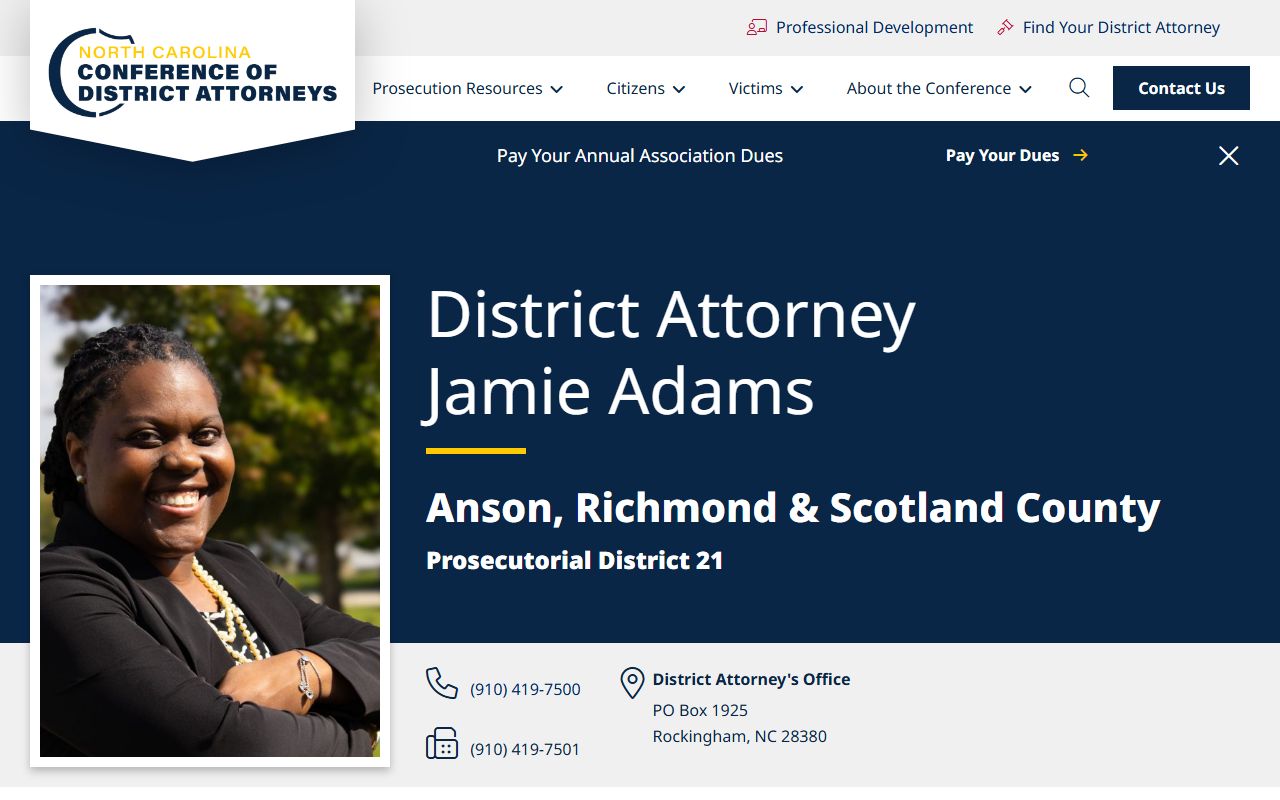
The DA role helps separate law-enforcement arrest records from the formal court charges that move through prosecution.
The North Carolina IDS Scotland County page lists public defender information for people who may have pending charges.
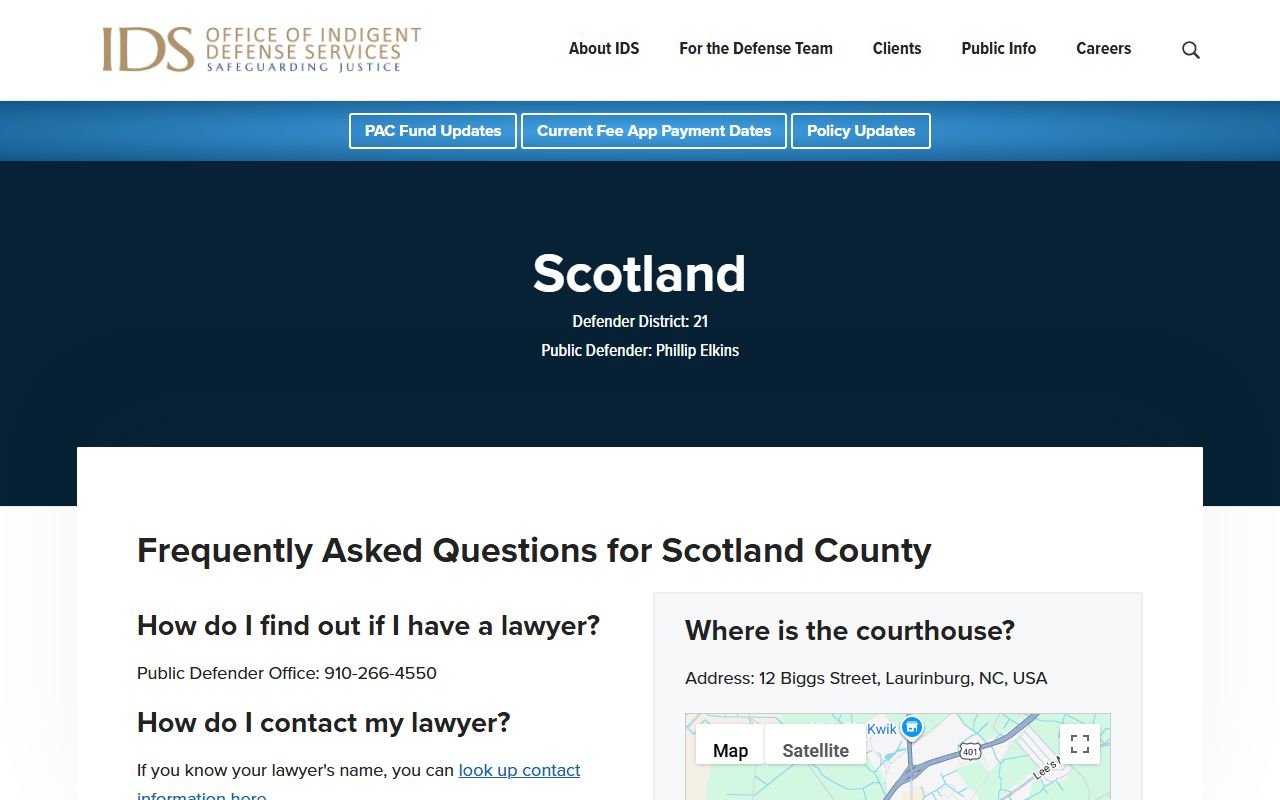
Indigent defense is not a records office, but assigned counsel can be critical when charges are pending.
The Sheriff Court Services page explains courthouse security and daily courtroom preparation in Scotland County.
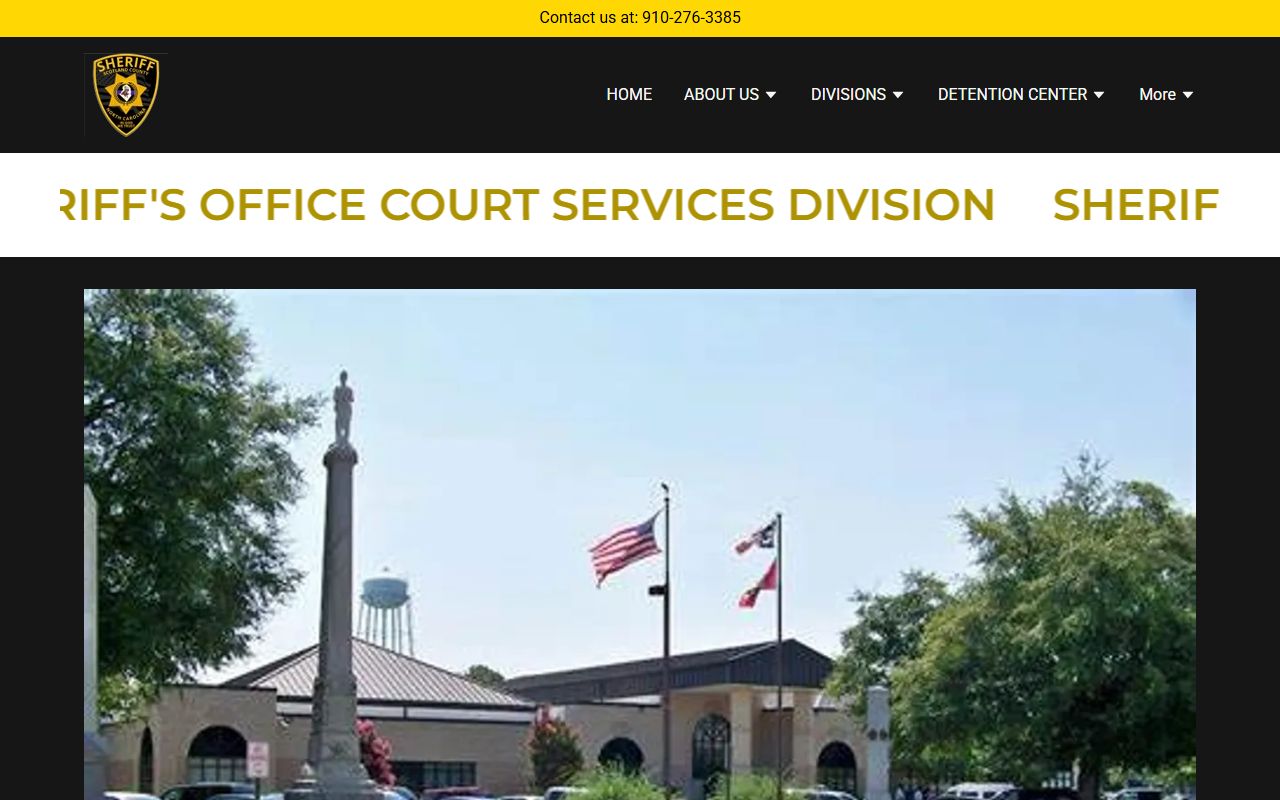
Court Services connects the arrest-to-court pathway with courthouse security, courtroom order, and court-day logistics.
Restricted Scotland County Arrest Records
Not every arrest or charge record is open to the public. Juvenile records are confidential under North Carolina law. Abuse, neglect, dependency, adoption, mental health, sealed, and expunged records can be withheld from public search. Personal identifying information such as Social Security numbers, financial account numbers, state ID numbers, passport numbers, PINs, and similar data should be redacted from public images when required.
Expunction can affect arrest records and charge records when a court order applies. The proper expunction path depends on the charge, age, disposition, prior record, waiting period, and statute. A dismissed charge does not vanish automatically from every system. A person with an expunction order should keep a certified copy as proof if an agency database or private data source later shows a mismatch.
| Issue | Sealed | Expunged |
|---|---|---|
| Public access | Blocked from ordinary public view. | Removed from public official records covered by the order. |
| How it happens | Confidentiality law or court order. | Petition and court order under a specific expunction statute. |
| Effect on searches | Portal or Citizen Connect may show little or no public detail. | Public court search should not show the covered official record. |
| Proof | Ask the clerk about access authority. | Keep a certified expunction order. |
Scotland County Charge Record Contacts
Different offices answer different parts of an arrest-to-charges question. The Sheriff's Office and detention center handle custody and sheriff-side records. Magistrates may be involved in warrants, criminal process, first appearance, or bond-related duties. The District Attorney handles prosecution and criminal trial docket functions. The Clerk of Superior Court holds the filed court case record and copy channel.
Scotland County Sheriff's Office
212 Biggs Street
Laurinburg, NC 28352
910-276-3385
Custody, incident, criminal-paper, and sheriff records channels.
Clerk of Superior Court
Scotland County Courthouse
212 Biggs Street
Laurinburg, NC 28352
910-266-4400
Filed charges, case files, dockets, dispositions, and copies.
Public Defender Office
231 E. Cronly Street
Laurinburg, NC 28352
910-266-4550
Assigned-counsel questions for eligible defendants.