
Search Scotland County Court Records
Public Scotland County court records are searched first through the North Carolina eCourts Portal. Scotland County joined eCourts on October 14, 2024, so the local search path is now a mix of online Portal tools and courthouse copy service. Smart Search is the main case-summary tool. Search Hearings is used for court dates and calendars. NC Judgment Search is used for judgment indexes. Online payment tools may also show eligible criminal, infraction, restitution, attorney-fee, probation, and parole balances.
Start with the best known identifier. A case number is strongest, but a party name, business name, attorney name, bar number, or citation may work in the correct Portal module. The official Portal training explains that the Enterprise Justice case number uses a two-digit year, case type letters, a six-digit sequence, and a three-digit county identifier. Name searches can be narrowed with location, case type, status, filing-date range, and wildcard rules. For background-check quality work, the Judicial Branch directs people to the county clerk's office rather than relying only on Portal.
- Open Portal and choose Smart Search for the case summary, Search Hearings for a date, Judgment Search for judgment index data, or Make Payments for eligible payments.
- Enter a case number, party name, business name, attorney name, or citation, then set location to Scotland County when that filter is available.
- Use case type, status, filing date, or court-date filters to separate criminal, civil, estate, traffic, judgment, and special proceeding records.
- Review the case summary, docket events, hearings, dispositions, financial information, and document visibility notes before relying on a result.
- Contact the Scotland County Clerk of Superior Court for file inspection, certified copies, divorce judgments, older records, and copy questions.
The Judicial Branch eCourts services page identifies Portal as the online service for finding court records, hearing dates, and payments. That statewide service is now central to Scotland County court records, but it has access limits for sealed, juvenile, adoption, mental-health, and otherwise confidential matters.
The official eCourts services page is reflected in this local image source from the manifest.
View the North Carolina Judicial Branch eCourts services source for the statewide service list.
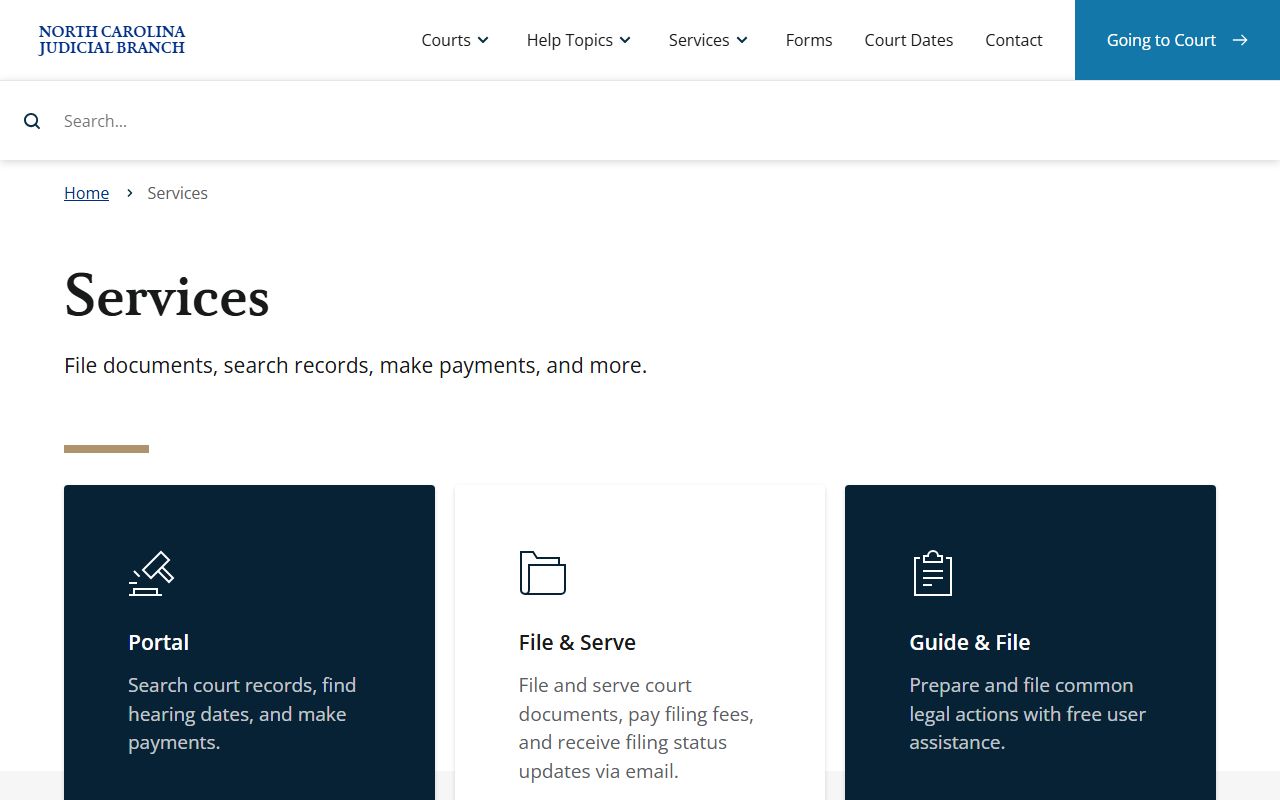
That service list helps explain why one Scotland County record search may involve Smart Search, a hearing lookup, a payment module, or a courthouse copy request.
Scotland County Court System
Scotland County does not have a separate county-run court system. The North Carolina Judicial Branch describes the courts as one unified statewide system. Local trial court work is handled through the Superior Court and District Court divisions of the North Carolina General Court of Justice. Scotland County is listed in Prosecutorial District 21, Superior Court District 21, and District Court District 21, with the county courthouse serving as the local point for filings, hearings, clerk access, magistrate matters, and many public-record questions.
Superior Court handles felony criminal cases, civil cases over $25,000, jury trials, and some appeals. District Court handles many misdemeanors, infractions, juvenile matters, domestic cases, small claims, and magistrate-related matters. The Clerk of Superior Court is both the court-record custodian and the probate judge for most estates. Appeals usually move first to the North Carolina Court of Appeals, which reviews legal or procedural errors instead of retrying the facts.
Typical case flow: Magistrate or District Court process › District Court or Superior Court hearing › judgment or disposition › North Carolina Court of Appeals when an appeal is allowed.
| Court or Office | Local Role | Common Records |
|---|---|---|
| Superior Court Division | Felonies, higher civil cases, jury trials, certain appeals | Indictments, civil judgments, felony dispositions, orders |
| District Court Division | Misdemeanors, infractions, juvenile, domestic, small claims, magistrate matters | Traffic citations, misdemeanor cases, family orders, hearing dates |
| Clerk of Superior Court | Trial court records, filings, copies, estates, special proceedings | Case files, indexes, estate records, divorce judgments |
| Magistrates | Initial criminal process, small claims, warrants, some ceremonies | Warrants, summonses, first appearance or bond-related entries |
The Judicial Branch county landing page gives Scotland County's district assignments and official court links.
View the Scotland County Judicial Branch source for the county court listing.
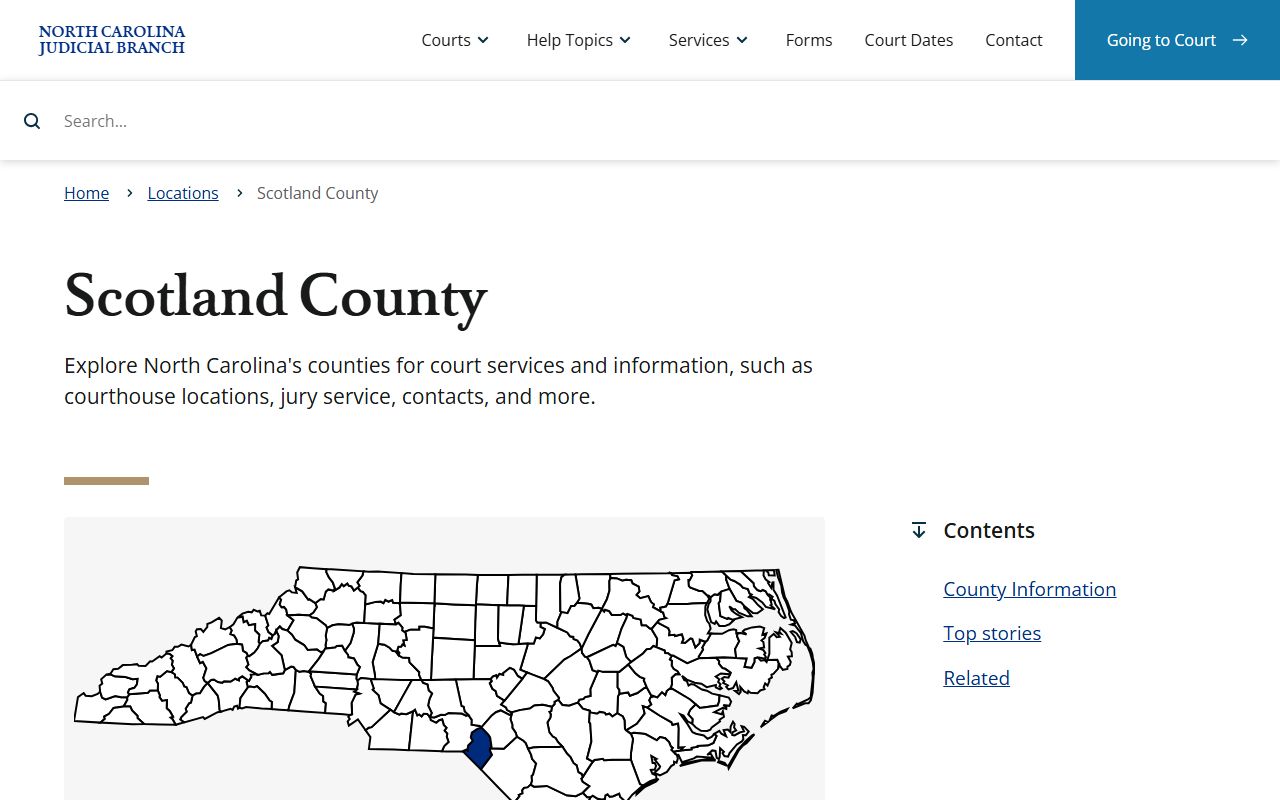
Those district listings matter because Scotland County searches are filtered through statewide tools, not a locally owned case database.
Scotland County Courthouse Records
The main public court counter for Scotland County is the courthouse in Laurinburg. The Judicial Branch lists the visit address as 212 Biggs Street, Laurinburg, North Carolina 28352, and the mailing address as Scotland County Courthouse, P.O. Box 769, Laurinburg, NC 28353. The main courthouse and Clerk of Superior Court phone is 910-266-4400. Public hours listed by the Judicial Branch are Monday through Friday, 8:30 a.m. to 5:00 p.m.
The courthouse contact directory also lists related court offices that help define where records and questions go. The District Attorney is listed at 910-266-4500. Magistrates are listed at 910-266-4540. District Court Judges are listed at 910-419-7575. The Superior Court Judges Office and Court Reporter contact is 910-419-7686. The courthouse is also near the Sheriff's Office and Detention Center on Biggs Street, which is useful context for criminal first appearances, custody questions, and warrant follow-up.
Scotland County Courthouse
212 Biggs Street
Laurinburg, NC 28352
910-266-4400
Monday-Friday, 8:30 a.m.-5:00 p.m.
Scotland County Register of Deeds
507 W. Covington Street
Laurinburg, NC 28352
910-277-2575
Monday-Friday, 8:00 a.m.-5:00 p.m.
Scotland County Sheriff's Office
212 Biggs Street
Laurinburg, NC 28352
910-276-3385
Jail phone: 910-277-3166
The courthouse page is also the official source for the building photo, public hours, and mailing address.
View the Scotland County Courthouse source for the address and hours.
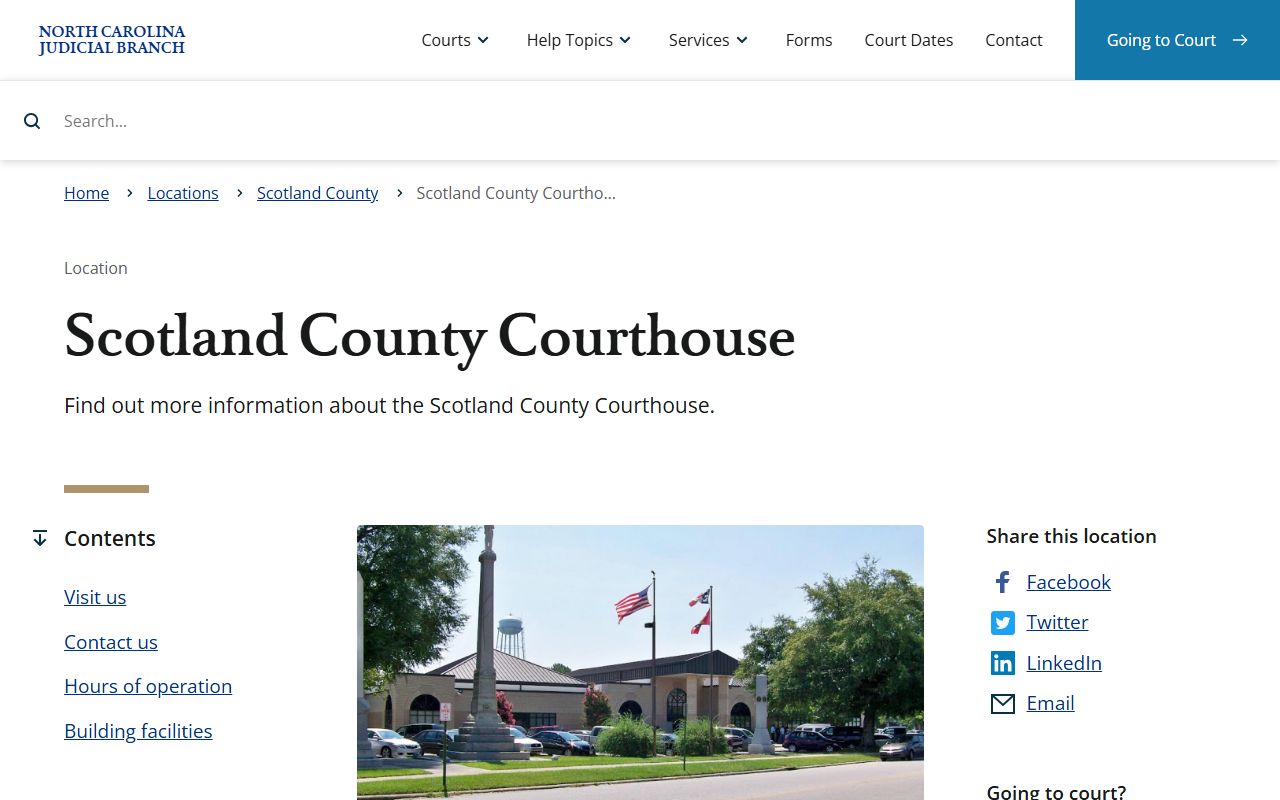
The address card and the official courthouse source point to the same Laurinburg access point for both Superior Court and District Court records.
Types of Scotland County Court Records
Scotland County court records include more than one kind of file. Civil records may show complaints, answers, motions, orders, judgments, liens, and lis pendens. Criminal records may show warrants returned to court, summonses, charging documents, appearances, pleas, motions, bond orders, dispositions, judgments, sentences, fines, and costs. Family records include divorce, custody, support, equitable distribution, and protective-order matters, although sensitive family details may be restricted.
Estate and special proceeding records are handled through the Clerk of Superior Court because North Carolina clerks act as probate judges for most estate matters. Traffic and infraction records are court records when a citation becomes a court case, while state driver-history data is a separate NCDMV record. Sheriff incident records, inmate confinement data, criminal papers, and most-wanted information sit outside the court file and should be searched through the Sheriff's Citizen Connect tools or by contacting the Sheriff's Office.
- Criminal court records show the court case after charges are filed, including pleas, hearings, dispositions, and sentencing.
- Civil court records show lawsuits, judgments, liens, notices, and docket events in civil disputes.
- Family and divorce records may show public judgments and docket entries, with some documents redacted or restricted.
- Estate records show wills, applications, inventories, accountings, and clerk-supervised probate events when public.
- Traffic court records show citations, waivers, court dates, payments, and dispositions tied to the court case.
What Scotland County Court Records Show
A Scotland County court record may show a case number, court division, filing date, case type, case status, parties, attorneys, charges or claims, hearing dates, docket events, dispositions, financial entries, and documents when public. The available fields vary by case type. A criminal case may focus on charges, plea, disposition, sentence, bond, costs, and probation terms. A civil case may focus on parties, claims, motions, orders, judgments, and liens. An estate case may focus on the decedent, personal representative, inventories, notices, and accountings.
| Field | What It Shows |
|---|---|
| Case Number | Enterprise Justice format may include year, case type letters, sequence number, and county identifier. |
| Filing Date | The date the case, charge, petition, or estate matter entered the court system. |
| Parties | Plaintiff, defendant, State, petitioner, respondent, debtor, decedent, heir, or representative names when public. |
| Charges or Cause | Criminal offense, civil cause, estate issue, family claim, traffic citation, or judgment category. |
| Disposition | The outcome of a charge, claim, citation, judgment, or case event when public. |
| Financial Information | Fines, costs, restitution, attorney fees, probation fees, judgments, or other public balances. |
- Docket
- The chronological list of filings, hearings, orders, and case actions.
- Disposition
- The outcome of a charge, claim, or case.
- Redaction
- The masking or removal of protected personal information from a public copy.
Scotland County Court Records Access Laws
North Carolina public access for Scotland County court records draws from both general public-record law and court-specific rules. N.C.G.S. Chapter 132 covers public records held by public agencies unless another law creates an exception. Court records also rely on N.C.G.S. 7A-109, which requires clerks to maintain records, files, dockets, and indexes and generally opens those records to inspection during regular office hours unless law says otherwise.
Access is practical as well as legal. Portal is useful for public case summaries, hearings, judgments, citations, and payments. The Clerk of Superior Court is the right office for full file viewing, certified copies, complete divorce judgments, older records, and many background-check needs. Judicial Branch public-record requests are better suited to administrative Judicial Branch records than to a court case document already held by the county clerk.
Key Statutes:
N.C.G.S. Chapter 132 - public records are generally open unless a statute creates an exception.
N.C.G.S. 7A-109 - clerks maintain court records, dockets, files, and indexes for public inspection unless restricted.
N.C.G.S. 7B-3000 - juvenile court records are withheld from public inspection except as allowed by law or court order.
North Carolina's public-record framework is the source behind many access limits and copy rights.
View the North Carolina public-records statute source for Chapter 132.
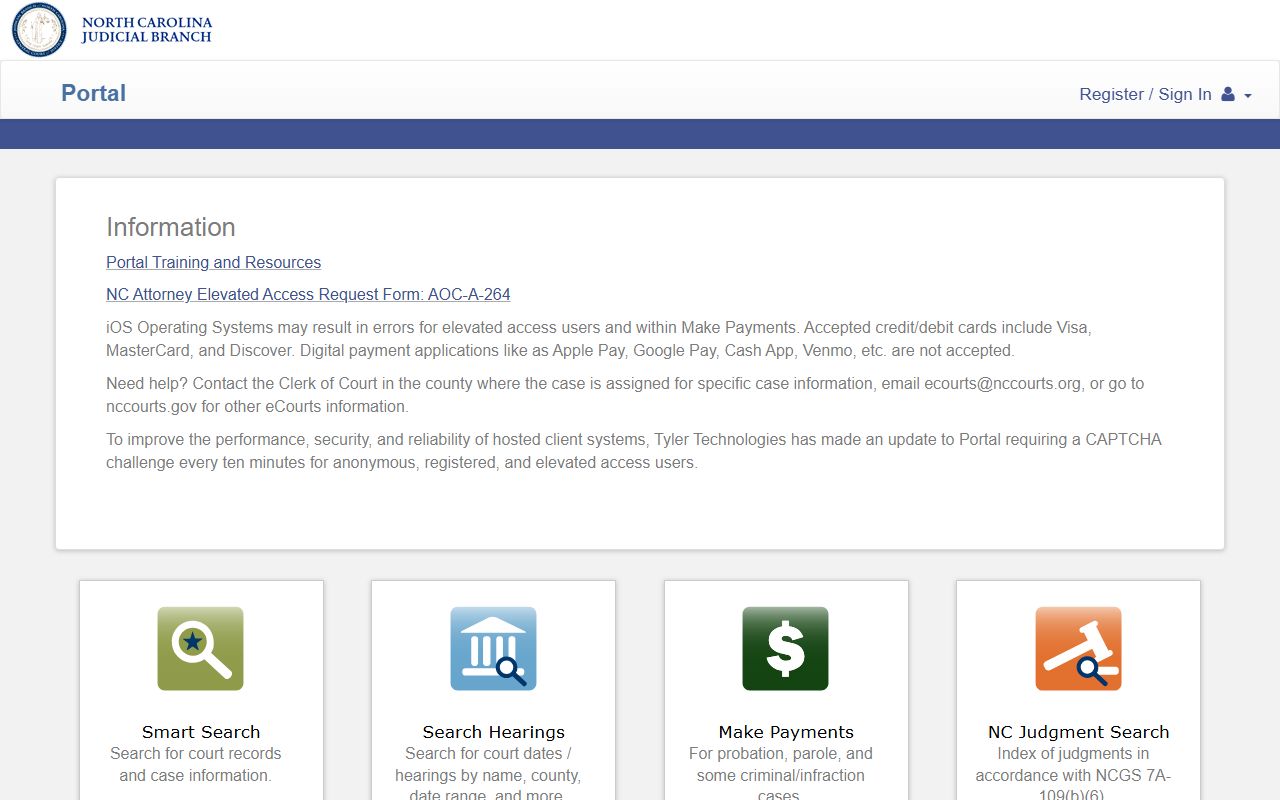
The public rules support access, but Portal and courthouse staff still must block sealed, expunged, juvenile, adoption, and other restricted records.
Restricted Scotland County Court Records
Some Scotland County court records are not public even when a case exists. Juvenile records are confidential under N.C.G.S. 7B-3000, with access limited to authorized people or court order. Adoption records are generally confidential under Chapter 48. Mental health commitment matters often include medical information and should be treated as restricted. A judge may seal a record that would otherwise be public, and an expunction order can remove eligible criminal records from ordinary public access.
Personal identifiers also get special care. The Scotland County Register of Deeds warns filers not to include Social Security numbers, taxpayer IDs, driver license numbers, passport numbers, checking or savings account numbers, card numbers, PINs, or passwords unless required by law or reduced to a lawful redacted form. A person may request redaction of that kind of information from an online image by written request that identifies the document and the location of the information.
Note: If a public search returns no case, the record may be restricted, sealed, expunged, misfiled, or held by another office.
Scotland County Specialty Programs
Official Scotland County sources found during research did not identify named local drug court, veterans court, or mental health court pages with schedules and eligibility rules. The Sheriff's Court Services page does say the courthouse has an exception for night specialty courts, so special sessions may occur after ordinary courthouse hours. Use the Clerk of Superior Court or District Attorney contact directory for current specialty-court calendars rather than assuming a program name.
Two related programs help round out the local justice system. The North Carolina Business Court is a specialized forum within the Superior Court Division for complex corporate and commercial cases designated by the Chief Justice, though it is not a separate Scotland County courthouse. Scotland County also has a county Reentry Program for adults who are supervised or recently released and tied to Scotland County by residence, adjudication, or employment.
Scotland County Sheriff Records
The Scotland County Sheriff's Office is led by Sheriff Ralph Kersey and is listed at 212 Biggs Street, Laurinburg. The office phone is 910-276-3385, and the jail phone is 910-277-3166. Sheriff records are not the same as court records. The Sheriff's Citizen Connect system provides inmate confinements, incident search, criminal papers search, and most-wanted access. The Detention Center page lists Captain John Hunt as a detention contact and describes the jail as operating under the Sheriff's Office for people charged with or convicted of criminal and civil offenses as ordered by the court.
Use Scotland County inmate records for current jail confinement, Homewav visitation, Paytel phone, mail, and McDaniel Supply commissary details. Use the warrant page for Criminal Papers Search, Most Wanted, magistrate contacts, and warrant resolution channels. The research did not find a Scotland County sheriff app with app-only inmate or warrant search. Citizen Connect, phone, eCourts, and courthouse contacts are the documented channels.
The county sheriff page is the official local source for Sheriff Ralph Kersey, the Biggs Street address, and office phone.
View the Scotland County Sheriff source for office contact details.
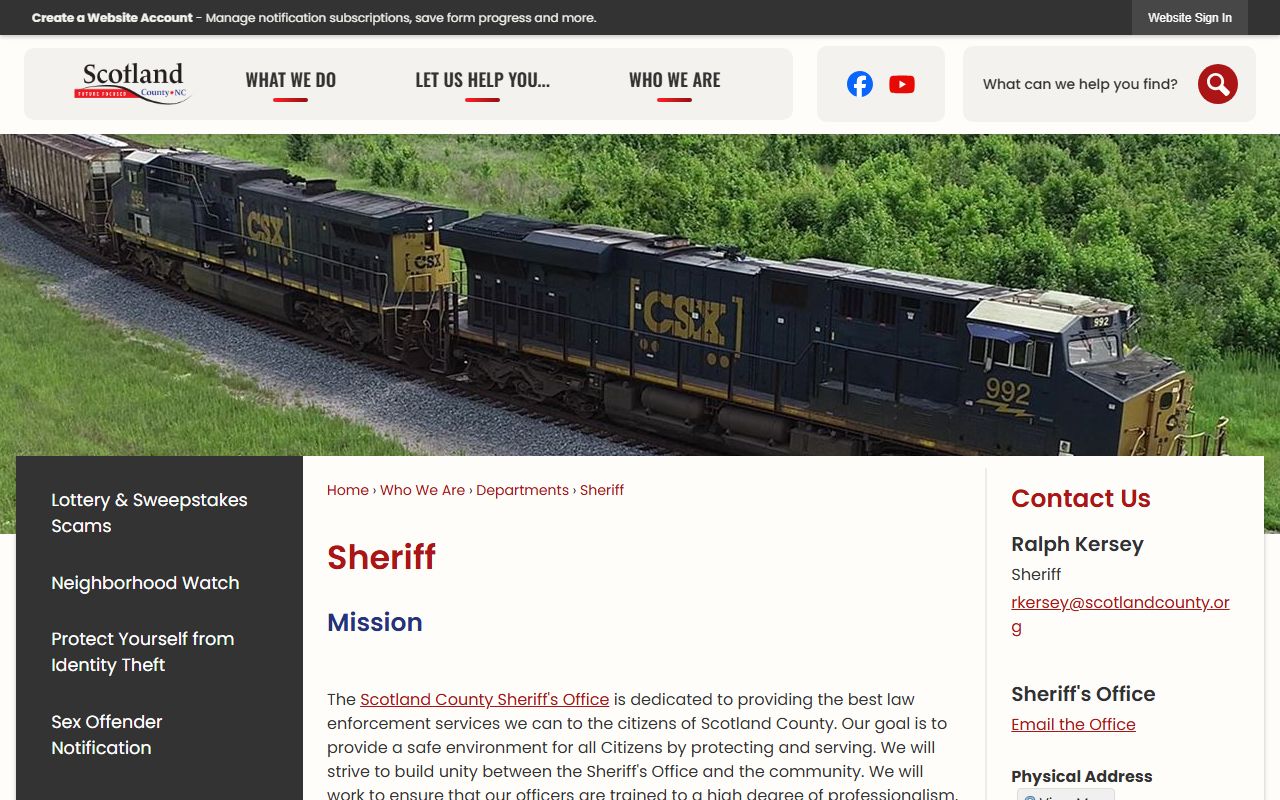
The sheriff source helps separate law-enforcement records from court case files maintained by the Clerk of Superior Court.
Scotland County Marriage and Probate
Marriage licenses and marriage certified copies are handled by the Scotland County Register of Deeds, not the Clerk of Superior Court. The Register is L. Page Pratt, III, and the office is at 507 W. Covington Street in Laurinburg. Applicants complete the online marriage application, call 910-277-2575 for an appointment, and sign with staff before the license is valid. Divorce judgments are different. Divorce is a court matter, so the judgment copy comes from the Clerk of Superior Court in the county where the divorce was granted.
Probate and estate records also run through the Clerk of Superior Court because North Carolina clerks act as probate judges for most estates. A public estate summary may be found through Smart Search with Estates or Special Proceedings filters, while complete files and certified copies are handled at the clerk's office. The Register of Deeds remains separate for deeds, plats, marriage, birth, death, military discharge, notary, and UCC records.
- Testator
- A person who made a will.
- Personal representative
- The person approved to handle estate duties.
- Intestate
- A death without a valid will controlling the estate.
The county Cities and Towns page gives useful local context for Laurinburg and the communities served by these records offices.
View the Scotland County communities source for local geography.
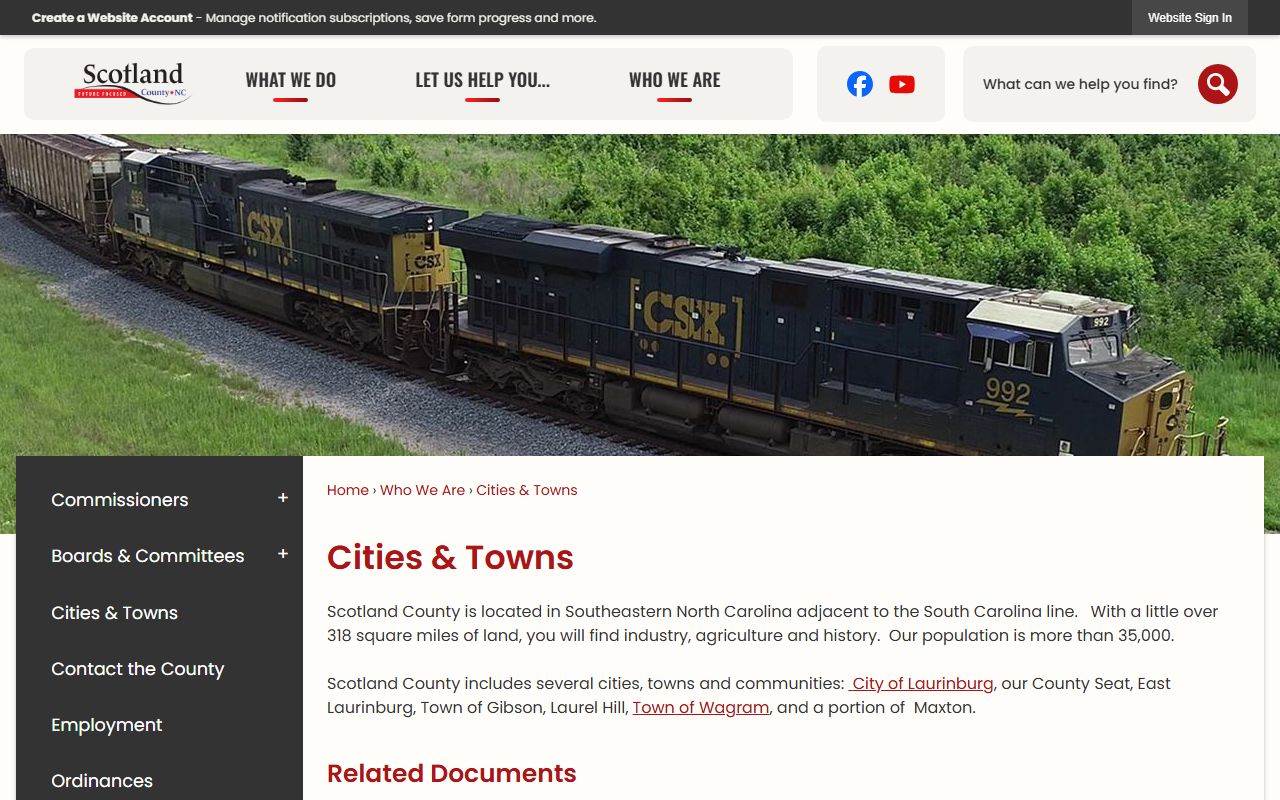
Those community listings matter because the Laurinburg courthouse and Register of Deeds serve East Laurinburg, Gibson, Laurel Hill, Wagram, and the Scotland County portion of Maxton.
Scotland County Records Fees
Research located a detailed local fee schedule for Register of Deeds services, but not a Scotland-specific court-copy fee table. For court-file copies, the Judicial Branch says copies are available for a fee through the clerk's office, so confirm the current amount with the Scotland County Clerk of Superior Court before mailing payment or requesting certification. Marriage and Register of Deeds fees are clearer in the county source.
| Item | Amount |
|---|---|
| Marriage license | $60 |
| Certified marriage copy | $10 |
| Uncertified vital or marriage copy | $0.25 |
| Real estate deed or instrument, first page up to fifteen pages | $26 |
| Certified real estate copy | $5 first page plus $2 each additional page |
Note: Court-copy fees should be verified with the Clerk of Superior Court because the research file did not locate a Scotland-specific court fee table.
Read Scotland County Court Records
Read a case record in sequence. Start with the case number, division, case type, filing date, and status. Then review the parties and attorneys. After that, move through docket events by date. A motion is a request for a ruling. An order is the court's direction on an issue. A disposition is the outcome of a charge, claim, or case. A conviction is not the same as an arrest or charge; it usually means a guilty plea, guilty finding, or judgment establishing guilt.
For criminal records, compare the charge list to the disposition and sentence. Charges may be amended, reduced, dismissed, or resolved by plea. For civil records, compare claims to orders and judgments. For estate records, track qualification, notices, inventories, accountings, and closing documents. For traffic matters, separate the court case from the NCDMV driver record because the DMV record controls license history, points, suspensions, and driver-status reporting.
Accuracy and Record Limitations
Scotland County online court records are useful, but they are not always the final copy. Portal may show selected case information, docket events, hearings, documents, judgments, and financial data, but the complete case file can still require a clerk visit. Some documents are restricted by case type or user access level. Registered public users do not gain extra access to restricted cases just by creating a Portal account. Elevated access is limited to authorized roles with verified need.
Use the originating office when accuracy matters. Court-file questions go to the Clerk of Superior Court. Custody and jail records go to the Sheriff's Office or Detention Center. Marriage, deed, and vital records go to the Register of Deeds. State prison and probation data go to the Department of Adult Correction. Federal records go to PACER, the Middle District of North Carolina, the bankruptcy court, or the Bureau of Prisons depending on the issue.
Note: Confirm critical dates, copy needs, and payment amounts with the office that created or maintains the record.
Scotland County Court History
Official current sources give more detail about today's court access than about courthouse architecture or early court terms. Scotland County is one of North Carolina's younger counties and is centered on Laurinburg, the county seat. The county's official pages describe it as a southeastern North Carolina county near the South Carolina line with more than 318 square miles and communities that include Laurinburg, East Laurinburg, Gibson, Laurel Hill, Wagram, and part of Maxton.
The most important recent records milestone is digital. Scotland County went live in eCourts on October 14, 2024, along with other southern and central Piedmont counties. That brought Enterprise Justice/Odyssey, Portal, File & Serve, and online services into local court work. Current Scotland County record access should be read as hybrid access: online searches for many summaries and dates, plus Clerk of Superior Court access for full files, copies, older records, and certification.
The state demographer source in the image manifest gives population context for the county served by the Laurinburg courthouse.
View the North Carolina county population source for official estimates.
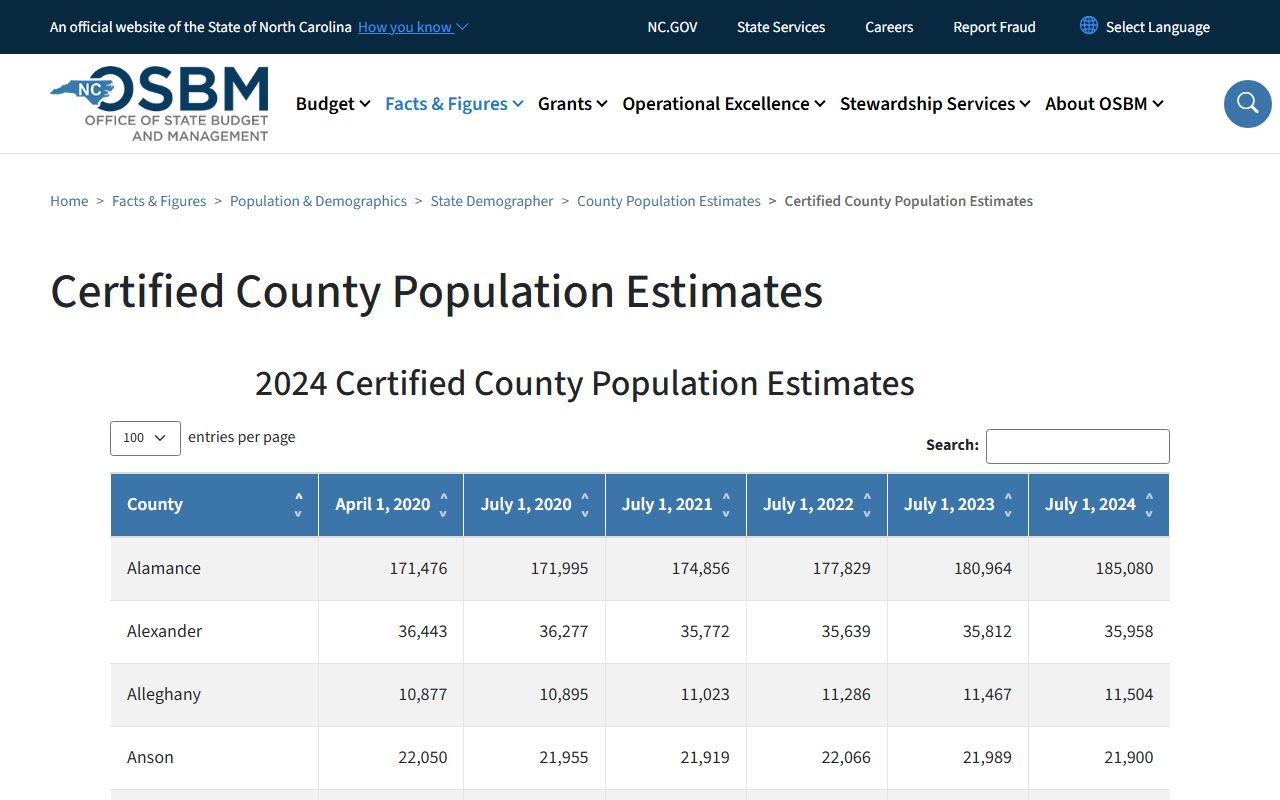
The estimate source is not a court record, but it helps frame the population served by the county courthouse and public-record offices.
Frequently Asked Questions
Where are Scotland County court records searched?
Start with the North Carolina eCourts Portal for public case summaries, hearing searches, judgments, citations, and eligible payments. Use the Clerk of Superior Court for full files, certified copies, older records, divorce judgments, and background-check quality searches.
Who keeps Scotland County marriage records?
The Register of Deeds handles marriage licenses and certified marriage copies. The office is separate from the court clerk. Divorce judgments are court records, so those copies come from the Clerk of Superior Court in the county where the divorce was granted.
Are Scotland County warrants online?
The Sheriff's Citizen Connect system includes Criminal Papers Search and Most Wanted. The Most Wanted page showed no active wanted persons on the research date, but that can change. For official warrant status, use Citizen Connect, the Sheriff's Office, magistrates, and eCourts.
Is the Scotland County jail roster the same as a criminal record?
No. The jail roster shows selected custody information. A criminal court record follows the prosecution in court and may show charges, hearings, pleas, dispositions, sentencing, costs, and probation terms.
Can public users see sealed or juvenile files?
Usually no. Juvenile records, adoption files, sealed cases, expunged records, and some mental-health or family materials are restricted. Public Portal results and clerk copies should not expose material that law or court order protects.
What changed with eCourts?
Scotland County joined eCourts on October 14, 2024. Many searches now run through Portal, Smart Search, Search Hearings, Judgment Search, File & Serve, and online payment tools. The courthouse clerk still remains essential for complete records and certified copies.
The Scotland County contact directory image source shows the local phone directory behind many of these office-specific answers.
View the Scotland County court contact directory source for local court office contacts.
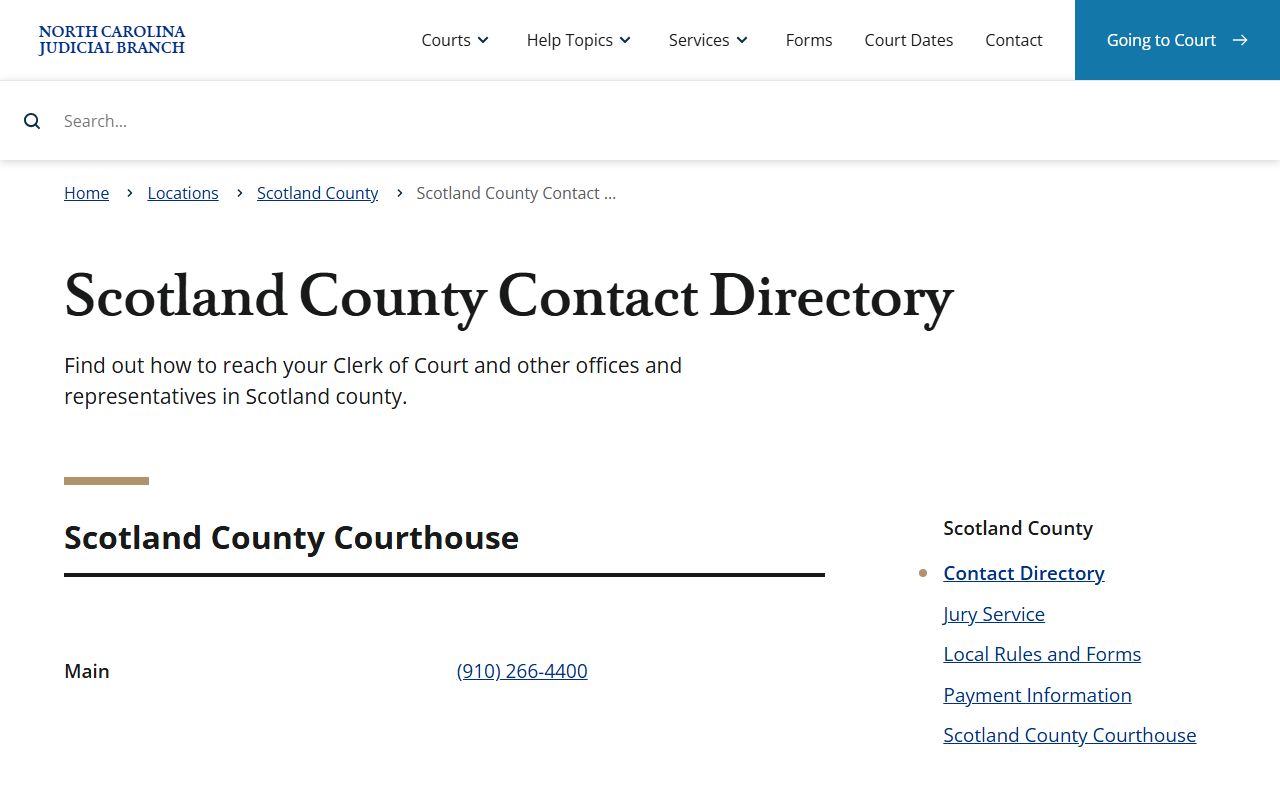
The directory is the practical fallback when an online search does not answer a court, docket, copy, magistrate, or District Attorney question.